MARRIAGE: December 24, 1930 ~ McQuerry and Fayne (Jessamine County, KY)

Clyde McQuerry (22 years old) married Violet Fayne (17 years old) on December 24, 1930 in Jessamine County, KY.

A Christmas Eve wedding

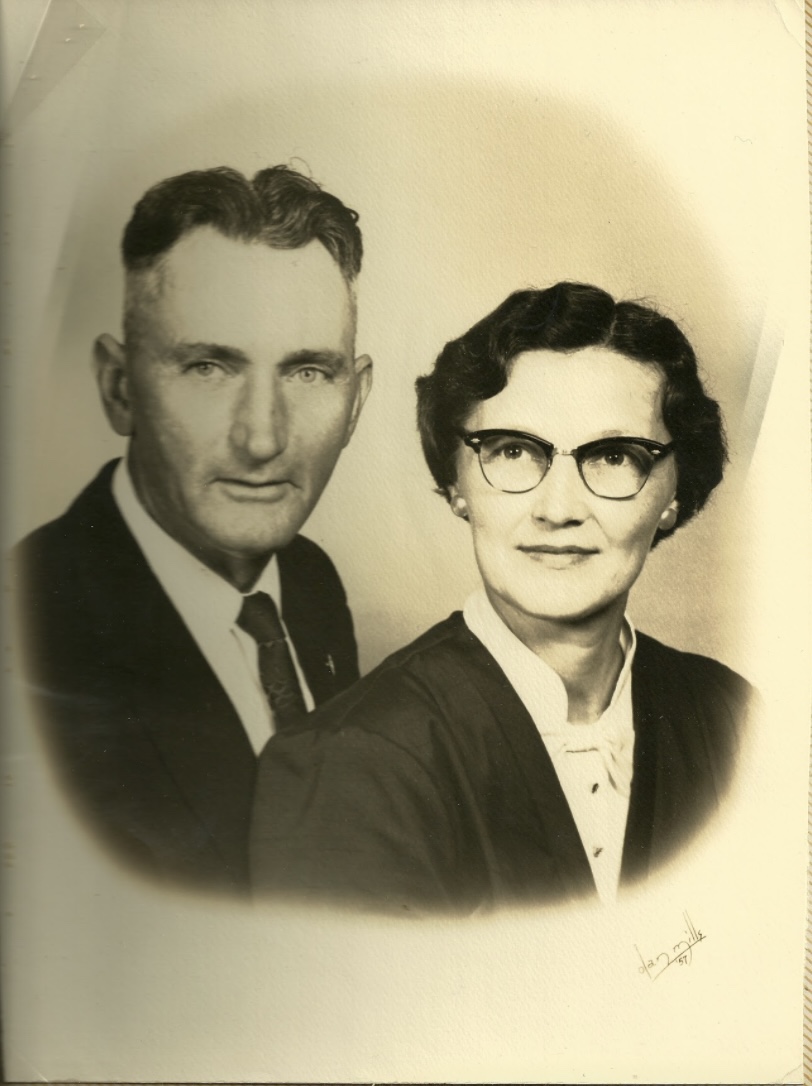
A courtin’ scene – Clyde Herbert McQuerry and Violet Sunbeam Fayne,
my maternal grandparents circa 1928-30,
Sugar Creek Pike, Little Hickman, Jessamine County, Kentucky

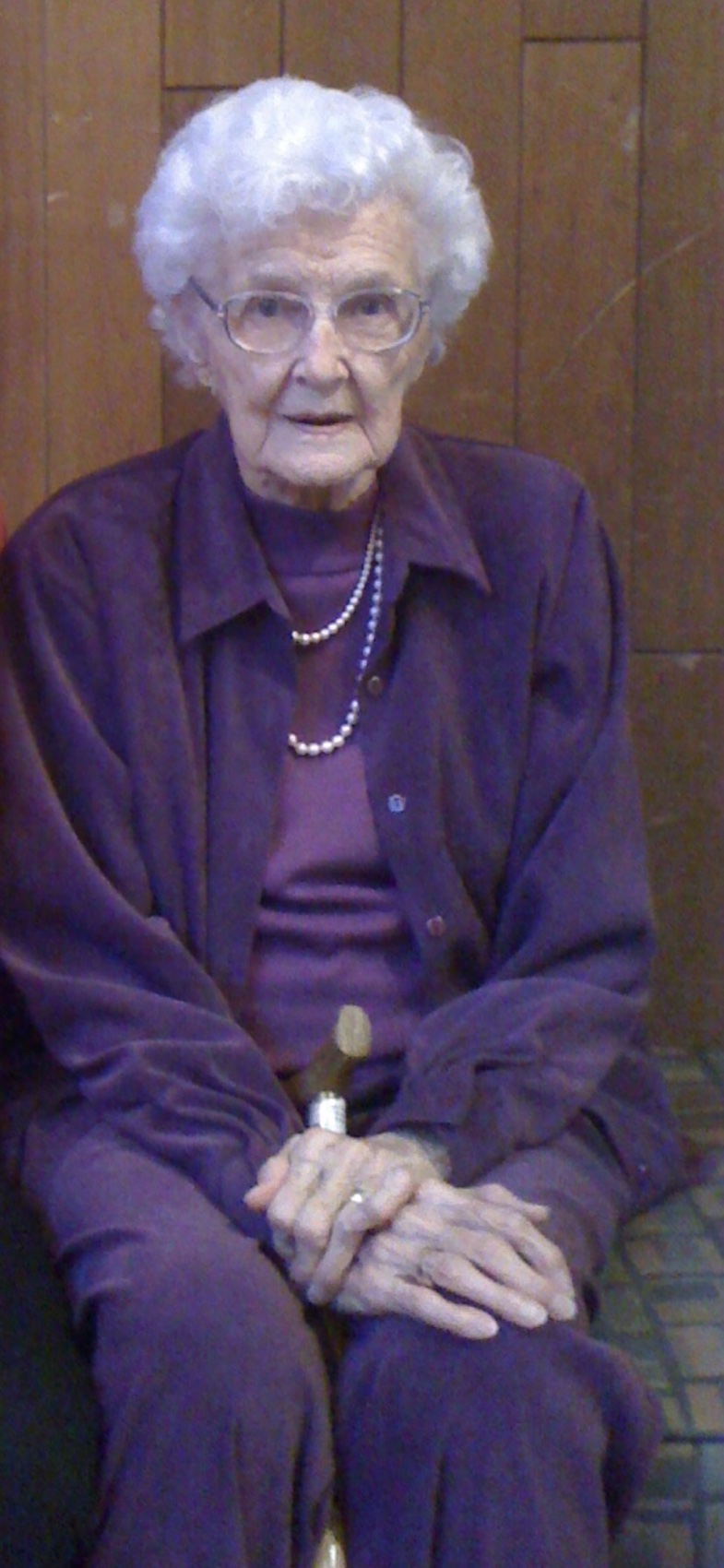
The phrase “don’t make ’em like they used to” comes to mind. I look at these young faces and see the beginning of a love story that spanned nearly a century. Look at their arms, hands. Entwined and naturally fitted together. A metaphor for their lives. Even after Clyde died from cancer in 1977, Cutters kept their connection a daily practice. She wrote to him in her diaries, everyday for 35 years until she could no longer see well enough to write. She reached 100 years before that happened.

Both families were members of Wesley Chapel on Sugar Creek Pike, Cutters was born next door to their church, which is where they met, although they did attend different schools. The McQuerrys lived on a large, likely multi-generational farm south on the banks of the Kentucky River. Up the hill from there on Sugar Creek Pike was (and is) Wesley Chapel and neighboring Fayne family. Her utter goodness must have shot through him like a lightning bolt. Or, what if it was a slow burn, like they played together as kids? Both born and raised in a rural church community, it is within the realm of possibility. (I will ask Daddy Mac & ‘Tuh.)

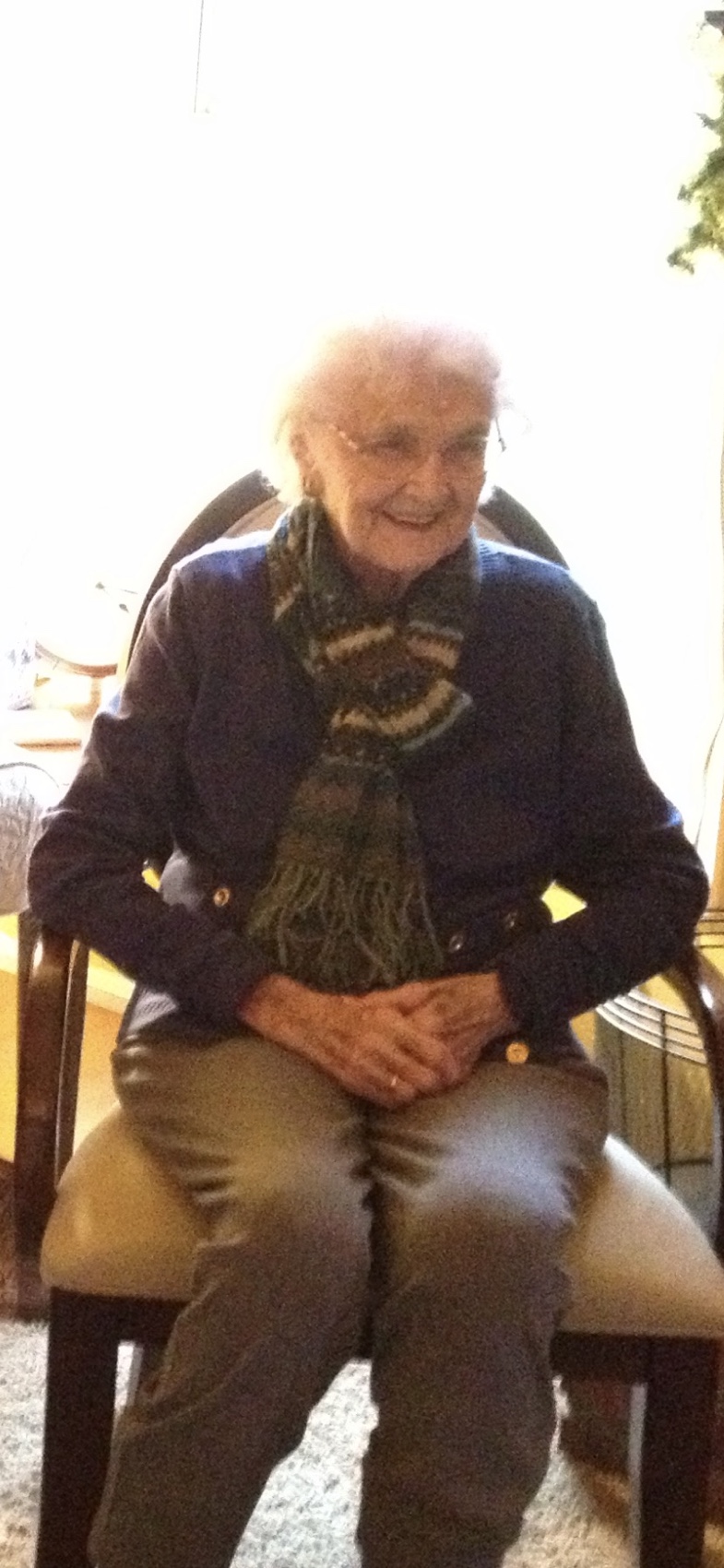
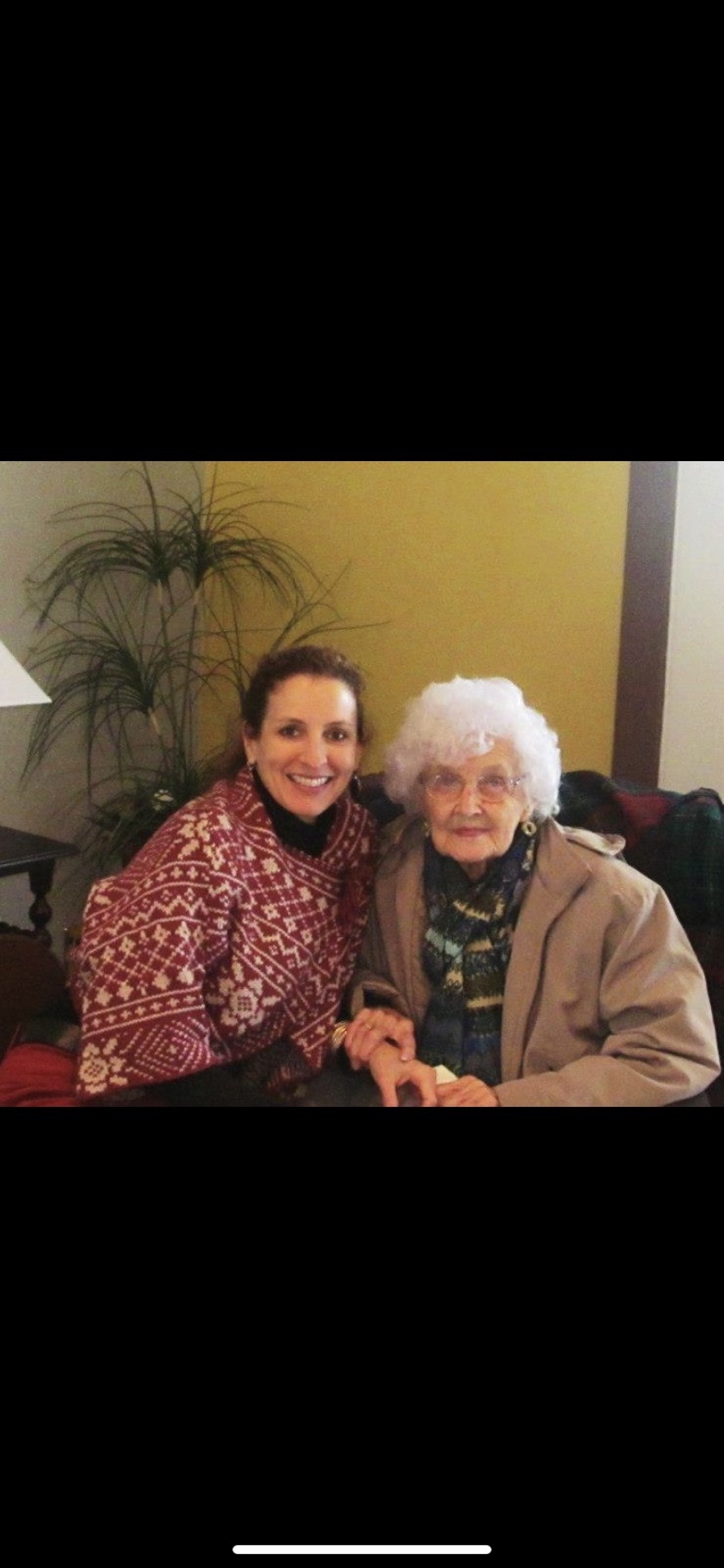
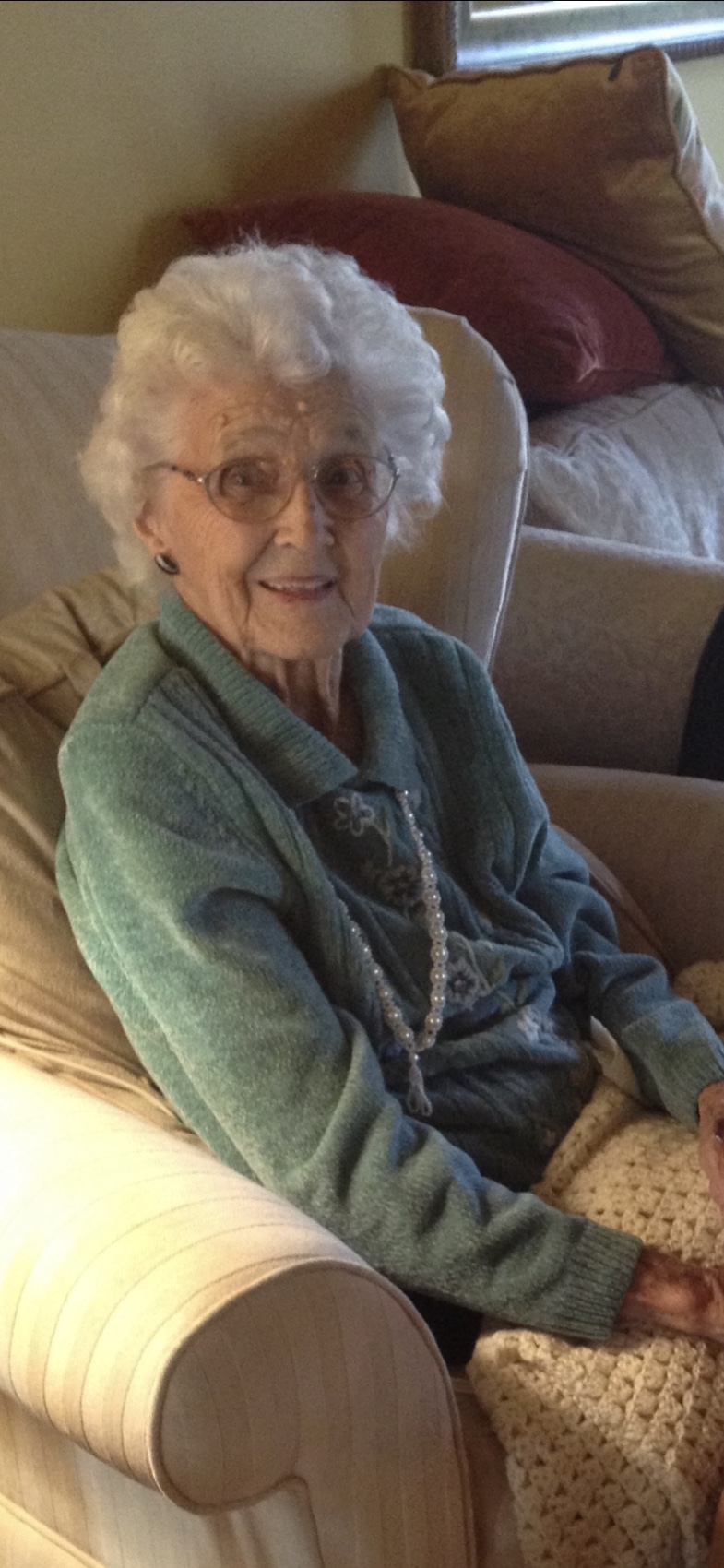
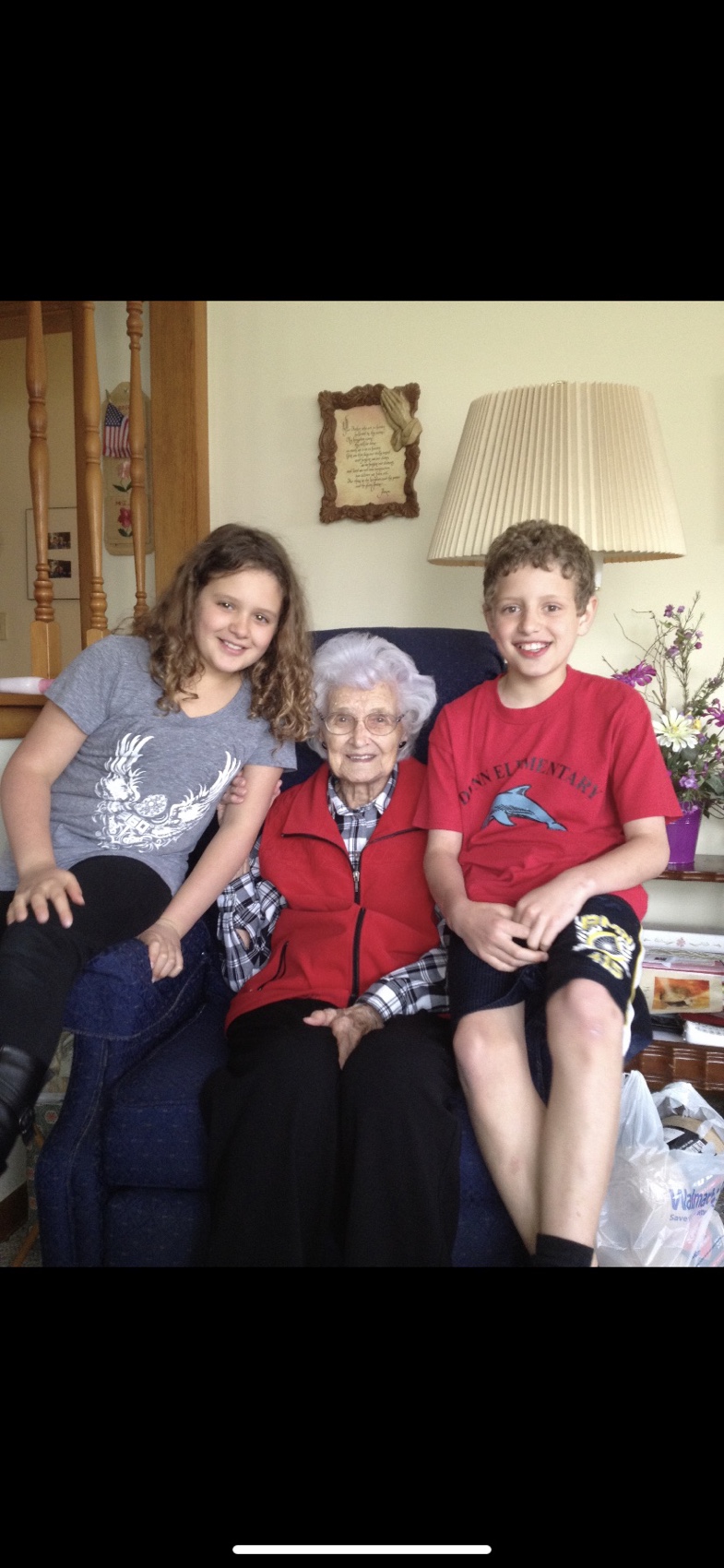
She carried a quiet wholeness and holiness, fingers ever in motion creating something for sharing like legendary bread and crocheted afghans. Cutters, as I knew Violet much later in her life, had this look at times of a far away thought. Her pause was nearly always just to the point you felt the need to pick up a dropped thread. You’d even inhale to speak, then suddenly, she released, nailing the reply. She reflected before speaking her wisdom and I suppose it was by the lessons along the way. She knew EXACTLY what was going on but she had to reflect and, in doing so, to compel you the same. In her presence you’d welcome the pause. She also delivered zingers with impeccable timing. Very clever. It was fun to giggle with Cutters.

The Cutters I knew also carried a sadness reminiscent of long-suffering as in The Bible. She carried it selflessly, though. She could experience joy and you can be sure if you were in her presence the light of that joy was always bright and it shone on you. Always, even in pain and brokenness, she spread light. And, she knew brokenness.

The proximity of Wesley Chapel to the house where Cutters (Violet Sunbeam Fayne McQuerry) was born on Sugar Creek Pike, Jessamine County, KY.
Photo: C. Mathews taken on a Ya-Ya’s trip in 2020, 107 years after.

But, in this moment, Clyde, my grandfather at 22 years-old, and Violet, my grandmother at 17 years-old, were in love and embarking together on the future. Christmas Eve. It was a Wednesday. It was 1930. Was it magical? How I hope there may have been a photo I might discover. When did Clyde know she was an angel walking among us? Did he whisper to her “I want to marry you on Christmas?”

The McQuerry-Fayne marriage ceremony was conducted at the parsonage of Rhodes Thompson, minister of the Nicholasville Christian church. [NOTE: I would like to locate this minister’s home address in future research.] You might wonder why the wedding ceremony did not take place at their own church, nor with their own minister. I wonder about that, also. Maybe these “crazy kids” had a reason.
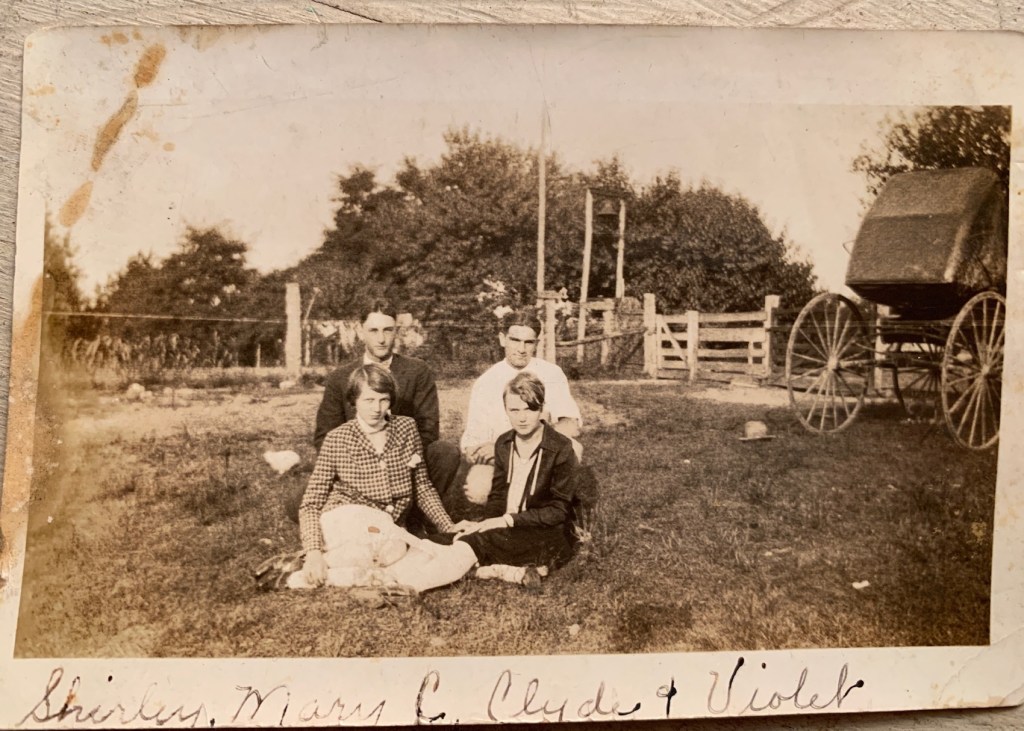
Shirley (unk), Mary C (unk), Clyde & Violet
date unrecorded, circa 1928

She had graduated from high school in the summer. She was a teenager, they were young’ns. So, you graduate high school and you plan to be married at Christmas? Don’t you wonder what the “kids” talked about then? Their connection to the outside world was through radio, newspapers, telegrams and word of mouth. The Wall Street Crash had occurred in October 1929 and now, one year later, people were IN the Great Depression. Also, prohibition was in effect, but I don’t think either of them drank alcohol ever.

In the photograph of four friends, you can see what looks like a buckboard in the corner, a fence and a large wooden gate. It reminds me of watching Little House on the Prairie growing up. Cutters liked to watch the TV show, also. I have a litany of “LHotP” stories. That Pa, though. More for another time.
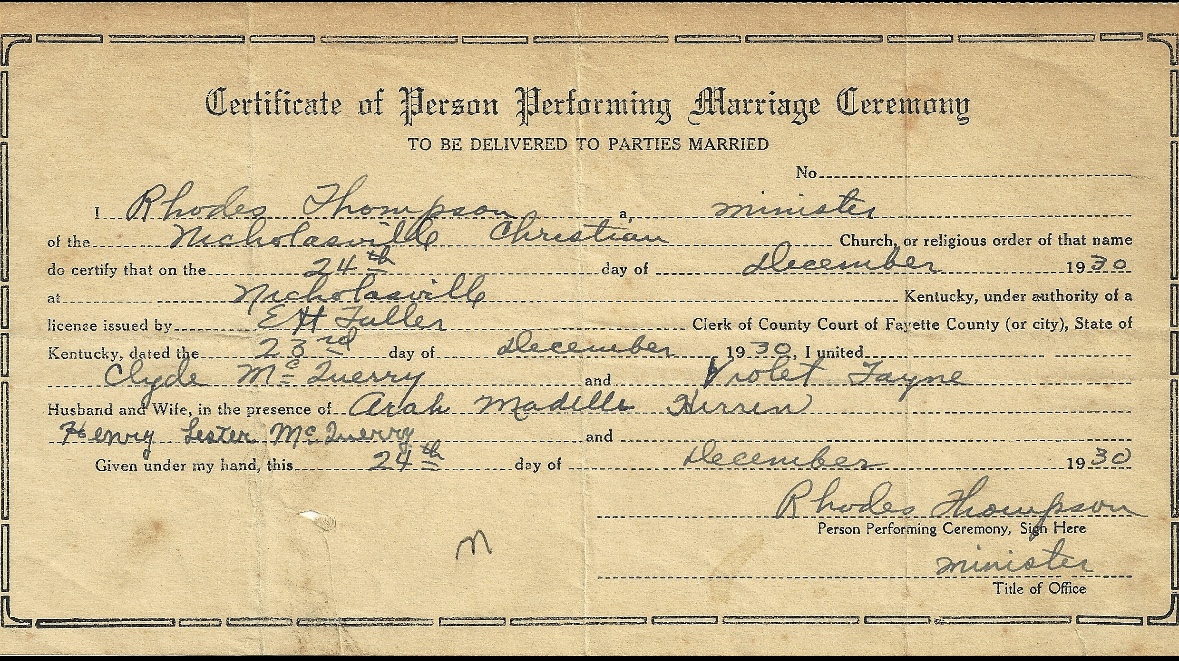
Certificate of Person Performing Marriage Ceremony

TO BE DELIVERED TO PARTIES MARRIED

I, Rhodes Thompson, minister of the Nicholasville Christian Church or religious order of that name do certify that on the 24th day of December 1930 at Nicholasville Kentucky, under authority of a license issued by E. H. Fuller, Clerk of County Court of Fayette County (or city), State of Kentucky, dated the 23rd day of December 1930, I united Clyde McQuerry and Violet Fayne Husband and Wife in the presence of Arab Madilla Herrin(sp?), Henry Lester McQuerry Given under my hand this 24th day of December 1930.

Person Performing Ceremony, Sign Here – Rhodes Thompson

Title of Office – minister

Witnessed by two people: A. M. H. (need help deciphering what is both hard to read and completely unfamiliar) and Henry Lester McQuerry. Should I expect to see a vouchsafe for the bride (because I do)? Where is the implication for her parents’ permission in this process? Or, was that not a thing? Their minister and her family are not represented on the certificate. I mean, where were HER people? Where was Big Mother and Ol’Daddy?

Celebrating Christmas for me was never complete until going with family to “Cutters’ Christmas.” I would venture to guess any of the cousins would say the same. The annual tradition remained a deeply special occasion for decades and maybe that was how Violet chose to honor their special day and her love Clyde each year.

Merry Christmas Eve and Happy Anniversary to you, Clyde and Violet. May you be entwined around each other celebrating for eternity.


OBITUARY 1940: MATHEWS, Mrs. John S. (Jessamine County, KY)

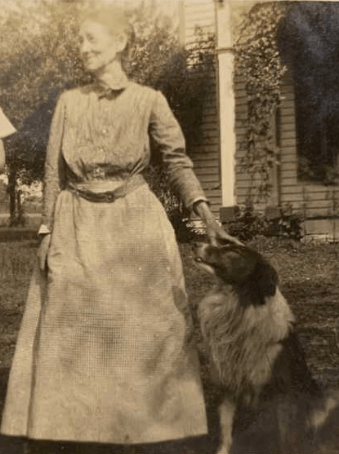
Mayme Cook Mathews, my great-grandmother born 1869 and died 1940 in Jessamine Co

Mrs. John S. Mathews – Mayme Cook

MATHEWS

Mrs. John S. Mathews, 71, died at her home on Brown street here Monday after a two-day illness. She is survived by her husband and two sons, Pleas C. and John Mathews, both of Nicholasville.

Deceased was the daughter of the late Mr. and Mrs. Pleas Cook one of Jessamine county’s oldest families. She was a kind Christian woman and was loved by a large host of friends and acquaintances.

Funeral services will be held at 10 o’clock Wednesday morning at the Baptist church, the Rev. J. A. Stallings officiating. Interment in Maple Grove cemetery here.

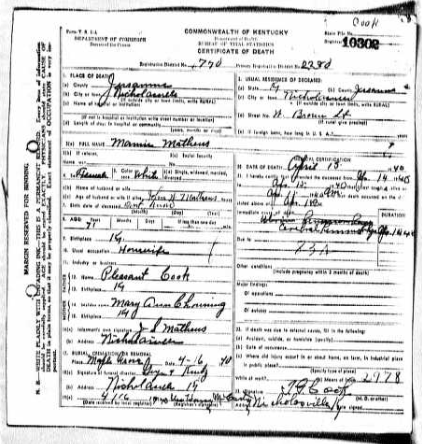
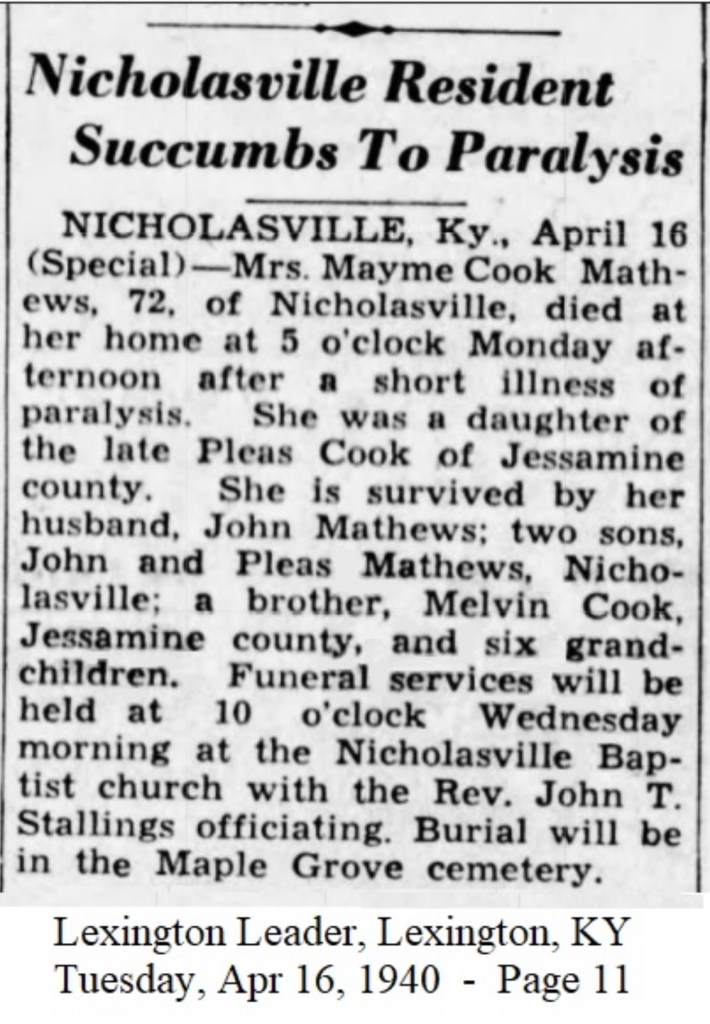
Mamie Mathews’ death certificate is missing details and has her name misspelled. Was the authorizer hurried? The cause of death is noted as “cerebral hemorrhage” which could be due to an injury or a stroke. The Lexington obituary cites paralysis, which again leads me to believe she had a stroke.

Nicholasville Resident Succumbs to Paralysis

Nicholasville, Ky., April 16 (Special) – Mrs. Mayme Cook Mathews, 72, of Nicholasville, died at her home at 5 o’clock Monday afternoon after a short illness of paralysis. She was a daughter of the late Pleas Cook of Jessamine county. She is survived by her husband, John Mathews; two sons, John and Pleas Mathews, Nicholasville; a brother, Melvin Cook, Jessamine county, and six grandchildren. Funeral services will be held at 10 o’clock Wednesday morning at the Nicholasville Baptist church with the Rev. John T. Stallings officiating. Burial will be in the Maple Grove cemetery.

The Lexington Leader, Lexington, KY, Tuesday, April 16, 1940 – Page 11

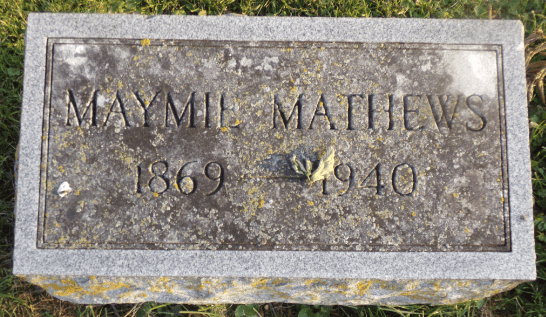
Maple Grove Cemetery, Nicholasville, Jessamine County, KY
image borrowed from Find A Grave

FOR FURTHER RESEARCH: Why is her address listed as Brown Street? Brown Street is in town and runs off Main Street near where the new library was opened. I thought John & Mayme Cook Mathews lived on the farm until John died, ironically about a month after Mayme died.

NEWSPAPER: Ford V-8 ad (1940)

The Nicholasville News, Wednesday, April 17, 1940

Who Says You Can’t Have EVERYTHING!

You can have V-8 performance – and gas economy, too!

An 85 h.p. Ford gave 24.92 miles per gallon in the annual official Gilmore-Yosemite road test, open to all cars. This was best mileage of all standard-equipped cars in this class!

You can have easy-handling – with big-car room and ride!

Everyone knows how easy it is to drive a Ford. But no one would know, til he gets in side, how big this Ford is in leg-room, seat-room, knee-room . . . nor what a thrillingly soft, steady, big-car ride it gives!

You can have low cost upkeep – and enjoy real fine-car features!

You shift gears on a Ford with the easy-acting type finger-tip shift used on costly cars. You get a semi-centrifugal clutch giving lower pedal pressure at shifting speeds, also typical of costly cars . . . to say nothing of the biggest hydraulic brakes ever used on a low-cost car. Your Ford Dealer’s ready and willing to trade . . . See him now!

You can have a FORD V-8 – and that’s what you’ll want when you try it!

The Nicholasville News, 1940

Read More…

PHOTO: Architectural poetry in Jessamine County

Imagery telling stories better than words.

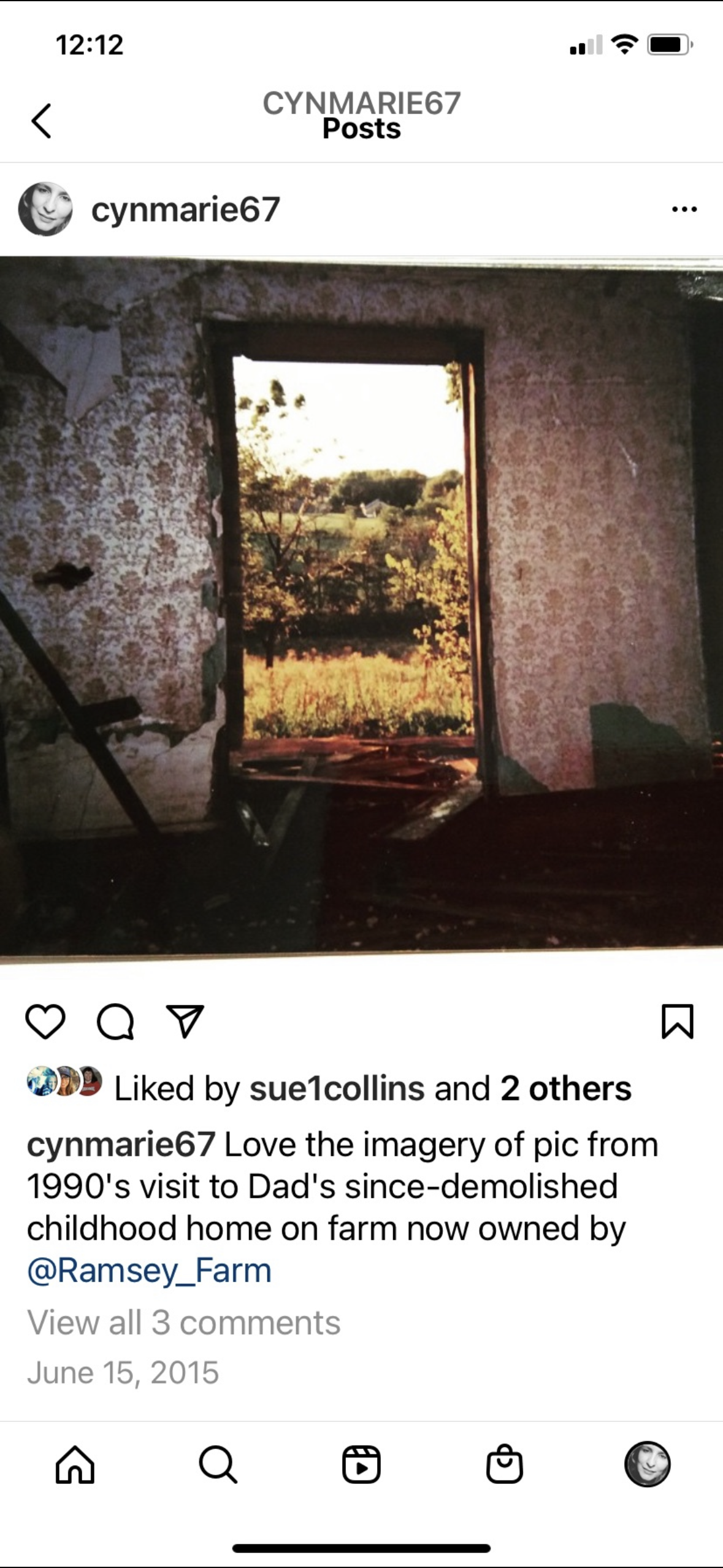
I made a visit to the home place of four family generations just up the hill from Jessamine Creek spring sometime in the 1990s.

The camera I carried with me was disposable and, truthfully, might never have been processed to the light of day. (I believe I still have undeveloped Kodak 35mm rolls from my youth somewhere in my boxed packrat tendencies. The canister with lid tale-tale (but not always of the contents, iykyk.))

Fortunately, I took those pictures that day – long before the genealogy bug bit down or the common use of cellphones, for that matter. And, not long before the building was razed. It had fallen into disrepair and sadly is no more.

My memory of visits to the home I called “Uncle Johnny’s” began when a very young child. The more prevalent in memory are those visits with Cutters, my mother Phyllis’ mother. I may have visited Grandmother Mathews more often than I have memories but they followed my grandmother’s move into town when she sold the property to eldest child, her step-son John Shepherd Mathews. Johnny’s wife Nannie Katherine died way too young in September, 1974. He and their four daughters stayed on the farm. Cousin Susan is a sweet wealth of stories from her life on the farm.

This picture is the view at the back, and I believe an east-southeast-facing side of the house just above the kitchen. I THINK and my Dad will hopefully correct me when he reads this if not. A second-story bedroom above is where my cousin Angie and I had spent hours jumping out of a closet loft onto a bed.

At the time of this photo, the floor was strewn with remnants of the lives that had made this home along with leaves and other debris blown in from the outside through the missing window pane. Perhaps you can imagine pausing amongst the random relics, and glancing out an opening between peeling wallpaper and broken beams and witness the irony in its framing the exterior beauty of Kentucky blooming and a farmhouse in the distance.

If you came across Abandoned Kentucky (@Abandoned.ky), this would have been a perfect feature, had timing been different.


Christmas, Royal Manor

Royal Manor, Nicholasville, KY

For several years in the late 1990s, two of my great-aunts – Aunt Vi and Aunt Hazel – resided at Royal Manor nursing home. It was designed as two long hallways like a letter “U” connected by central gathering, community spaces.

Down one corridor, my maternal grandmother’s elder sister had a room with a roommate, if I remember correctly. Hazel’s mind was strong and clear, her spirit mostly unsettled and her physical constraints dictated reliance on other people, whether in kindness and compassion or not. She knew what was up and was definitely not okay with it all.

Conversely, my paternal grandmother’s younger sister had a room to herself on the opposite Royal Manor corridor. She remained a sweet, pleasant spirit but drifted in and out of lucidity. We had deep conversations about far-distant memories. She could not tell me what or whether she had eaten that day. She did get manicures, apparently.

Here we are seated together on her bed. You can see the hospital nature of the bedframe along with the accent of “homelike” touches in a handmade afghan. Another contrast.

She was child-like as she worked to remove the gift wrap while emanating that giddy, expectant energy.

I remember one visit we sat side by side in rockers on the front porch and admired the sunset together. She talked of her home and that when she returned there someday soon, I should come visit. She would offer me things that she wanted to gift to me. She did not know that her home was packed away in a storage unit nearby and she would never be “going home” again.

Every so often, her body would shudder all over and she’d let out a moan, close her eyes for a moment. I do not know what her diagnosis was. Her pain was fleeting and repetitive, but I am not certain she remembered one to the next, really.

Viola died February 2000 and Hazel died in December 2000 that same year when I was living in New Jersey.

PHOTO: The Corman Carers

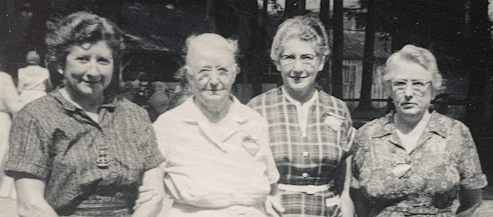
You might say educating is in my blood and these women were paramount in my own formation. Educators, living their Christian service and love instilled by the Shaker-educated youth of Martha Jane Bradshaw Corman, mother, and three of her daughters – Madeline, Viola & Fanny Dean. Two of the sisters taught school at the elementary and middle grades in northern Kentucky while the other, my grandmother, taught in one-room school houses throughout the Bluegrass region of Kentucky, specifically Jessamine County, with names like Sweet Home and Oak Hill.

Fully enjoying summers traveling, they invited the grandchildren-age generation of cousins on their annual summer trips across all these United States. The ORIGINAL aunt camp (*credit: S. C. Mathews – I see you Pebby). And, the original Ya-Ya’s, as we say in our family.

Photo: (left to right) Iva Madeline Corman, Martha Jane Bradshaw Corman, Viola Josephine Corman, and Fanny Dean Corman Mathews, my grandmother.

I remember visiting Frankenmuth, Michigan, as well as author and artist Gwen Frostic’s studio/visitor center in Benzonia. I have a beautiful collection of her work gifted to me, purchased by me and bequeathed to me through the estates’ transitions. It is on that trip with Aunt Vi & Aunt Madeline that I began with Christmas tree ornaments collecting as mementos from my travels.

It feels as though caring is woven in my DNA and was nurtured along by simply spending time with my great-aunts. My grandmother passed when I was in 4th grade living in Pittsburgh, PA, and my memories with her are fuzzy. When I look around my home, I pause to appreciate the things from my family, much of which ties back to them. Any artifact’s value perhaps felt priceless only to me, ultimately. It is the STORIES I crave and these hand-me-downs bring the memories and my soul to rejoice. I want to protect and preserve.

Maybe my heart’s call as service to others honors my ancestors, lives out in legacy. I can confirm I am a lifelong learner – and, most often the hard way. But, if it comes from the heart, is it ever wrong? Let me tell you, if you keep with these ancestry storylines I’m putting down – along the way, your heart will ache. Fair warning.


But, let’s first take a moment to reflect with some levity. Where my educators AT?!

Check out this excerpt from my WKU folk studies professor William Lynwood Montell’s 2011 publication, Tales from Kentucky One-Room School Teachers:

In 1872, the Kentucky State Legislature formally mandated its nine “Rules for Teachers”:

  1. Teachers each day will fill lamps, trim the wicks and clean chimneys.
  2. Each morning teacher will bring a bucket of water and a scuttle of coal for the day’s session.
  3. Make your pens carefully. You may whittle nibs to the individual taste of the pupils.
  4. Men teachers may take one evening each week for courting purposes, or two evenings a week if they attend church regularly.
  5. After ten hours in school, the teachers may spend the remaining time reading the Bible or any other good books.
  6. Women teachers who marry or engage in unseemly conduct will be dismissed.
  7. Every teacher should lay aside from each pay a goodly sum of his earnings for his benefit during his declining years so that he will not become a burden on society.
  8. Any teacher who smokes, uses liquor in any form, frequents pool or public halls, or gets shaved in a barber shop will give good cause to suspect his worth, intention, integrity and honesty.
  9. The teacher who performs his labor faithfully and without fault for five years will be given an increase of twenty-five cents per week for his pay, providing the Board of Education approves.

Okay, with so much to unpack here, is it even possible? Take a moment. Read it again. Read it aloud to someone. I wonder how much of this was still codified when my grandmother was a one-room school house teacher almost 50 years later.

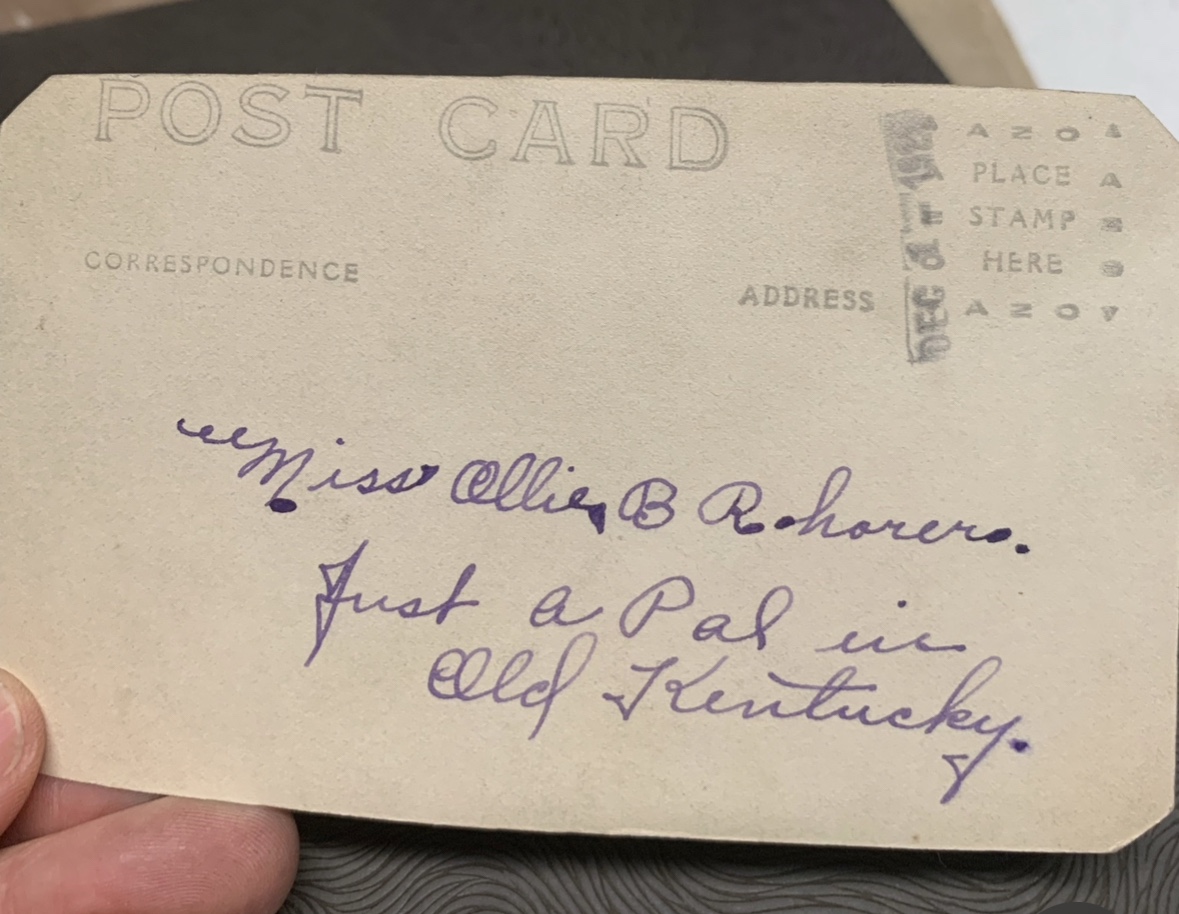
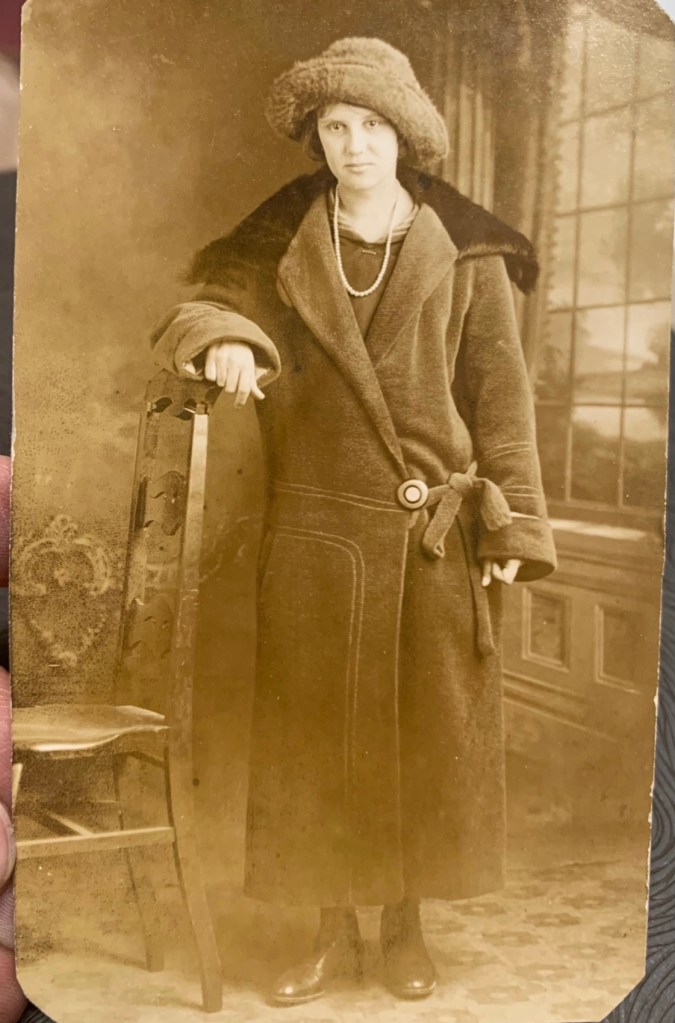
[ARTIFACT] “Miss Ollie B Rhorer. Just a Pal in Old Kentucky.”

POST CARD (side 1)
Miss Ollie B Rhorer

Just a Pal in

Old Kentucky

c. DEC 01 1920-something


POST CARD (side 2) – full image

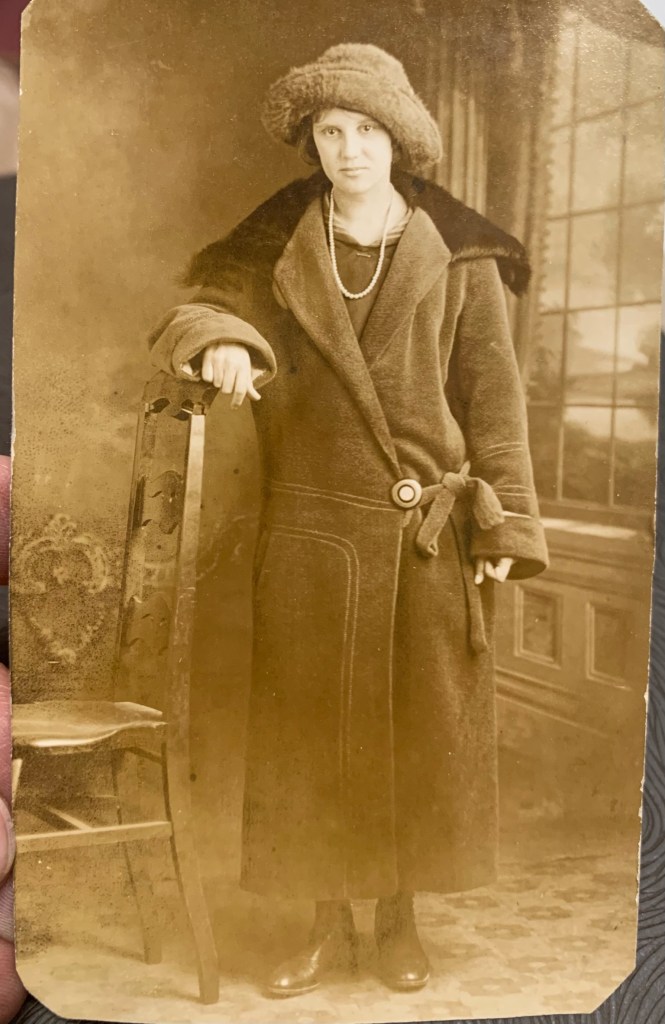
Exquisite imagery.

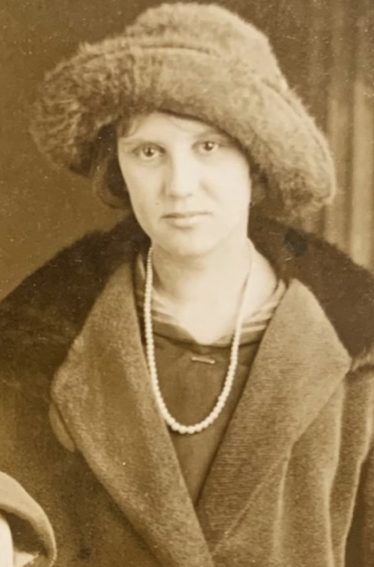
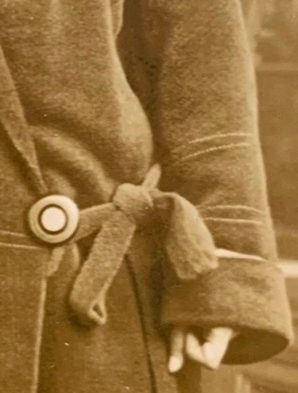
They don’t make ’em like they used to. That coat – Is it a heavy wool? What is the collar – fur? Details of the coat fastener fascinate me.

A single strand of pearls.

A woolen felt hat, perhaps. I can’t place the texture.

Have you ever wondered if you should have been born in a different era?

What catches your eye first? Her classic beauty, the direct gaze. One hand draped in a relaxed state while the other shaped as a relaxed fist. Feet somewhere between first and second position. Is the background a painted backdrop with a real, high-back chair?

I look forward to learning more about this woman and her connection to the family. She may have married a Corman and her maiden name Rhorer is listed among the earliest settlers of the county from the Morovian community, the United Brethren. The 1920 US Census shows her family lived near the Corman siblings enclave south of Nicholasville, Jessamine Co, KY. The Rhorer family cemetery is near the Corman family cemetery on Bethel Pike.


Recent Posts

S1:E4 ~ Spring of Jessamine Creek

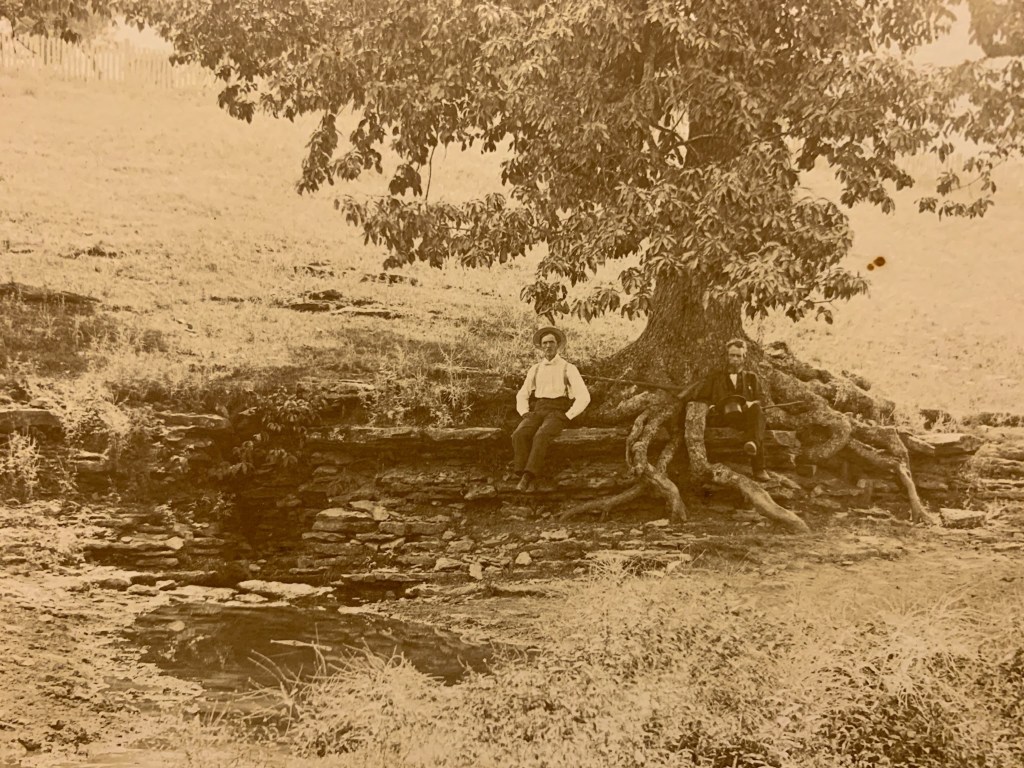
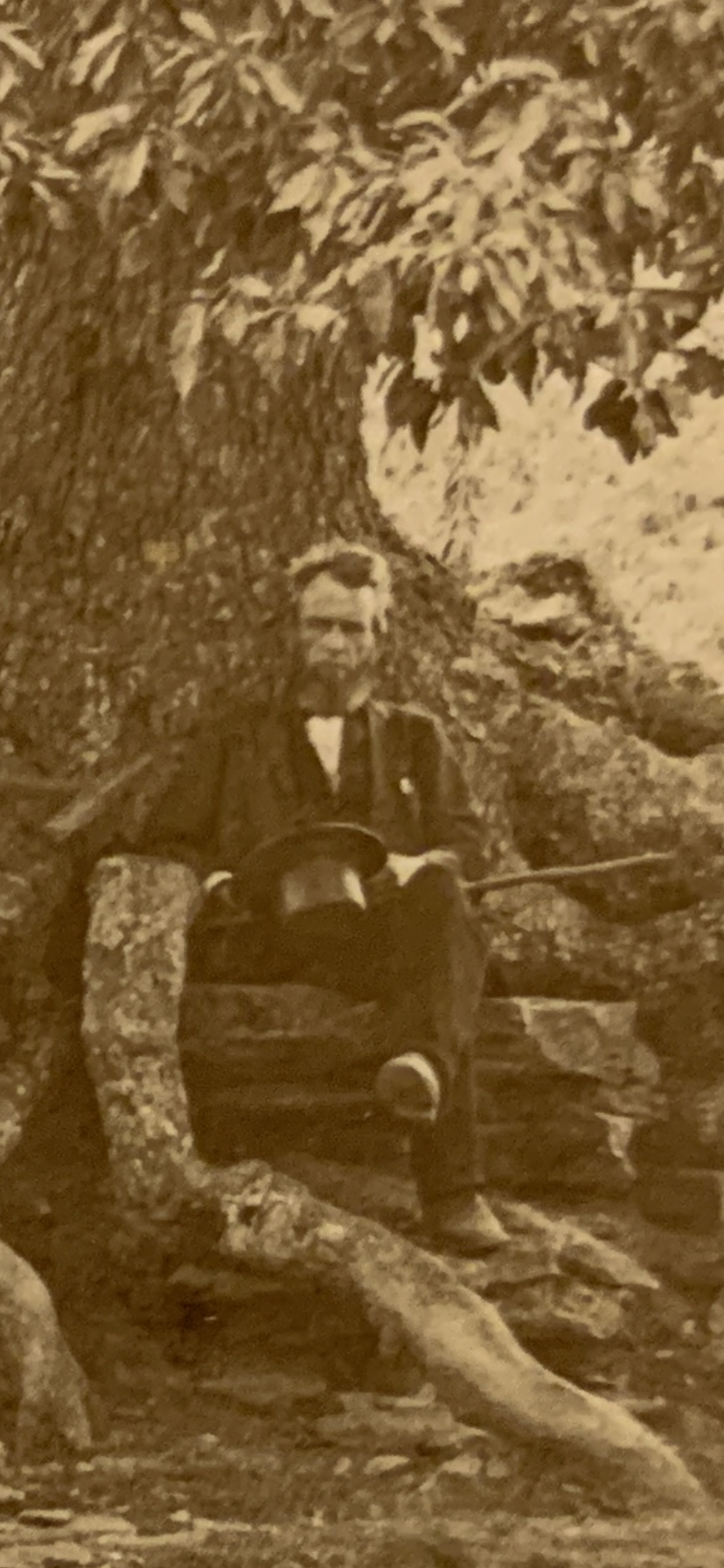
I love this photo. It was taken at the head or spring of Jessamine Creek that I knew somewhat as a child and my father knew as part of his daily life at the old home place. An original of this image is among the family heirloom artifacts I am in the process of documenting, which leads me to wonder if these men are ancestors of mine. The slope of the hillside, stacked layers of limestone formation, trickling water you can almost hear, the majestic shade tree with exposed mature roots like tentacles and brush in the foreground. I easily wax romantic about the richness of the scene. Additionally, this image appears in History of Jessamine County, Kentucky reference found in the Jessamine County Public Library. There are many great resources there.

Can anyone help me estimate the date of the image? The original print I have is affixed to a kind of cardboard so I am not risking damage to examine the back for any notes or context. Does the attire of the two men seated amongst the exposed tree roots provide clues? The man in suspenders does not look significantly of any particular time period as white shirt, trousers and suspenders is fairly common men’s attire. To me, the man on the right in his suit and with his hat and cane astride his lap looks reminiscent of Abraham Lincoln but that is not my assertion for it to actually be him. He would need to be squatted well into that spot, if so. There are physical similarities to my ancestor Pleasant Cook but I doubt the alignment of time periods.

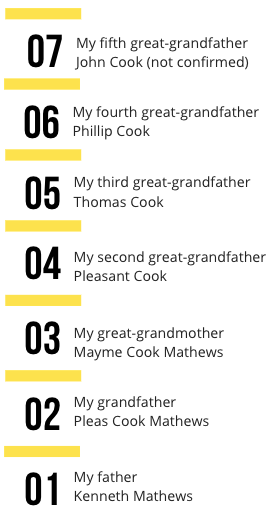
At closer examination of the background milieu, I see the repetition of pattern similar to a fence, a barn and perhaps a farmhouse. I am in the process of determining at what point the land was acquired into our family. A Jessamine County deed recorded in the mid-1800s shows Pleasant Cook (my 2nd great grandfather) purchased 53 acres along Jessamine Creek, among several other sizable property acquisitions. When he died in 1917, the creek property passed to his only daughter, Mayme Cook Mathews, my great grandmother. After her passing, the property was owned by my grandfather, Pleas Cook Mathews.

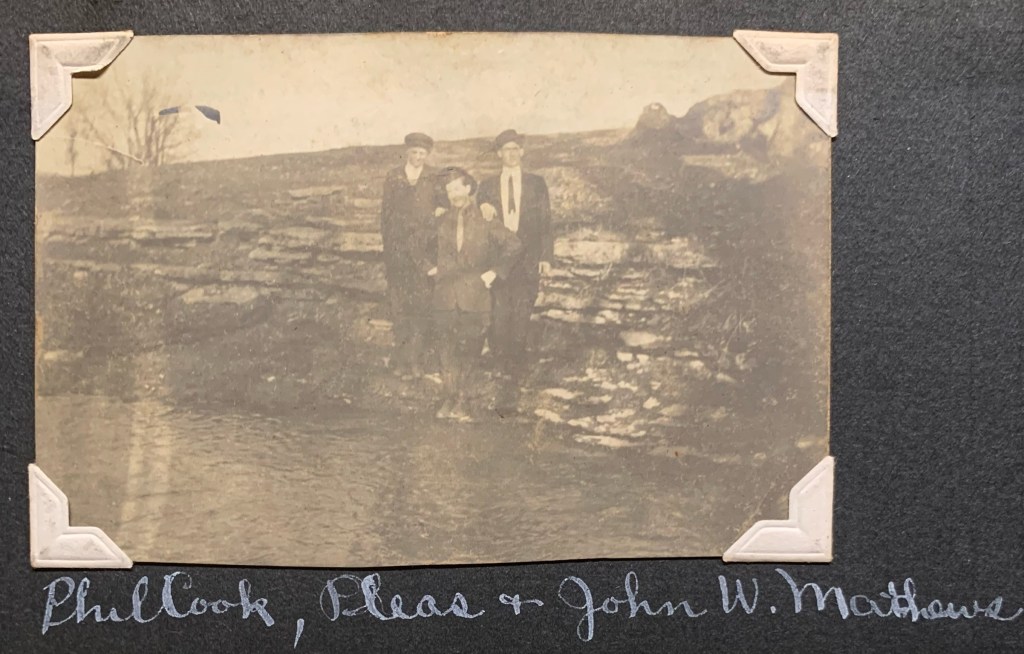
The image below shows my grandfather, his brother and their cousin standing together adjacent to the Jessamine Creek springs. I can estimate this image to be prior to 1917, which is when Pleas left for France in WWI. I wonder if this could have been taken at a special occasion, like a funeral. They are dressed in a way that makes me think it possible.

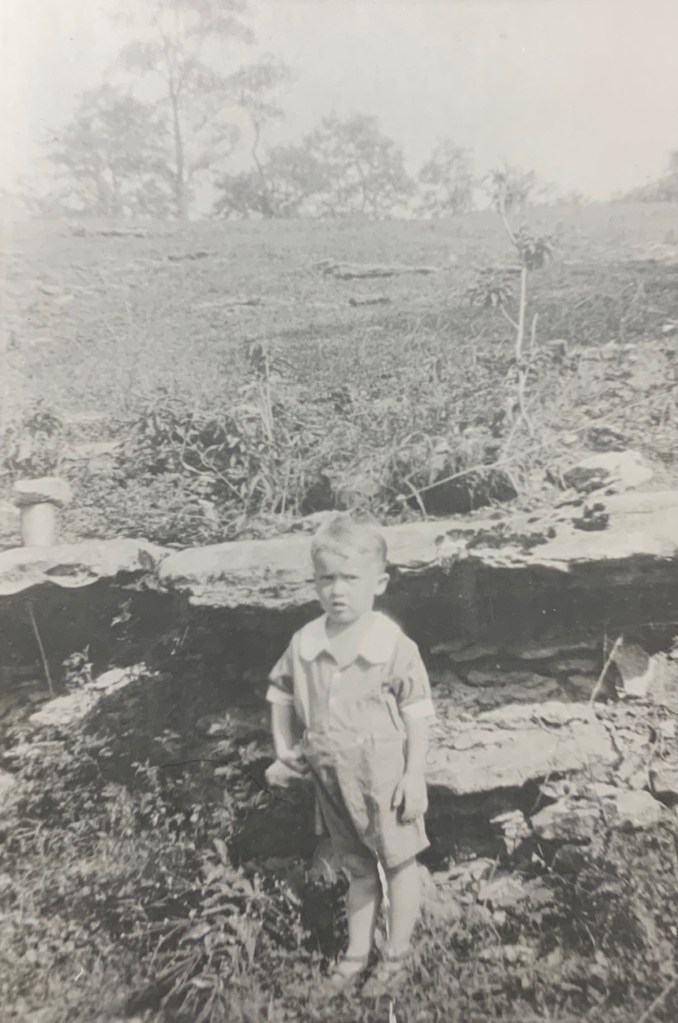
As another in this series, here is young Robert Ira Mathews, my uncle, at the same rocky crag as the other images. This image is circa 1935 based on the other artifacts of the same period. The Jessamine Creek spring was an integral part of my father’s family life growing up on the farm. More of those stories to come…

S1:E3 ~ Jessamine County

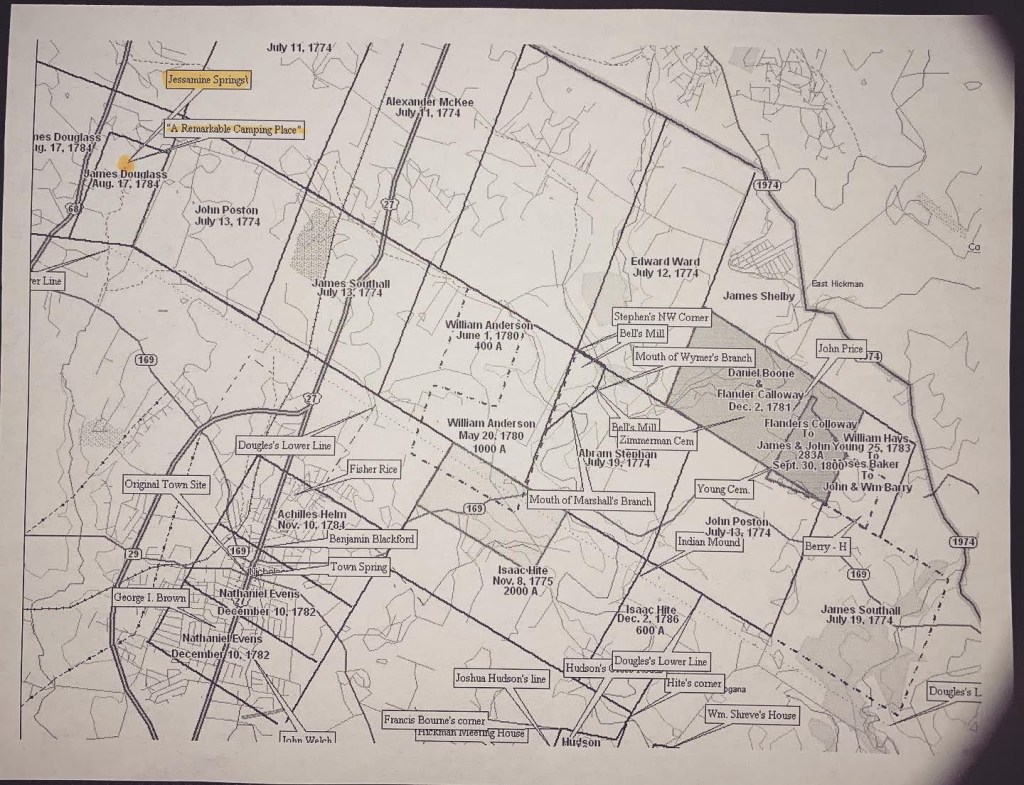
An interesting notation on the survey map pinpoints the springs of Jessamine Creek with “A Remarkable Camping Place” which leaves me wondering – Did Daniel Boone camp at that spot?

I spent most weekends of my youth on the road to and from my grandparents’ house in Nicholasville, so much so that I could follow it in my mind, specifically after exiting I-64 at Frankfort/Versailles. Passing through Woodford Co along that stretch of horse farms leading into downtown Versailles is picturesque. In my adolescent years, I resented having to go but now find myself full circle longing to spend more time in and around the places of my parents’ youth.

Both of my parents were born at home in Jessamine County – Dad, at the Mathews home place, Harrodsburg Road, and Mom, in Little Hickman, near Lock 8 of the Kentucky River. Eventually, they were neighbors on Richmond Road near downtown Nicholasville and as the story goes, he gave her a ride home from work one afternoon.

In 1798, the town of Nicholasville was laid out and named for General Nicholas, while Jessamine Co was created from part of Fayette Co and named for Jessamine Creek. Historical accounts note in 1774 surveyor James Douglass discovered a creek which he named for his eldest daughter Jessamine. Other accounts note the county was named by Col. John Price for the prevalence of Jessamine flowers, also known as jasmine. And, a bit of oral tradition describes a tragic account that Jessamine Douglass, daughter of James Douglass, was sitting alone overlooking a creek when she was attacked by an Indian. There are competing beliefs for the validity of this story and some who debunk it are adamant against its truth. As best I can tell, there is nothing definitive discovered to date but that is somewhat inherent in oral traditions.

Based on artifacts I’ve found, there was a landowner early in the settling of the county named James Douglass. A survey map with notations of Daniel Boone indicates as of August 17, 1784, Douglass owned property adjacent to present-day US-68 (Harrodsburg Road). Part of this property was later acquired by my great-great-grandfather Pleasant Cook and stayed in the family until the late 1960s. It was the home place for my father, his siblings and parents.

An interesting notation on the survey map pinpoints the springs of Jessamine Creek with “A Remarkable Camping Place” which leaves me wondering – Did Daniel Boone camp at that spot?

Credits to: Jessamine County Historical Society map image and the work of countless researchers before me, and to my cousin Jeff Mathews for sharing family artifacts that kickstarted my obsession.

S1:E2 ~ Cutters’ home going

Sunday, September 7, 2014

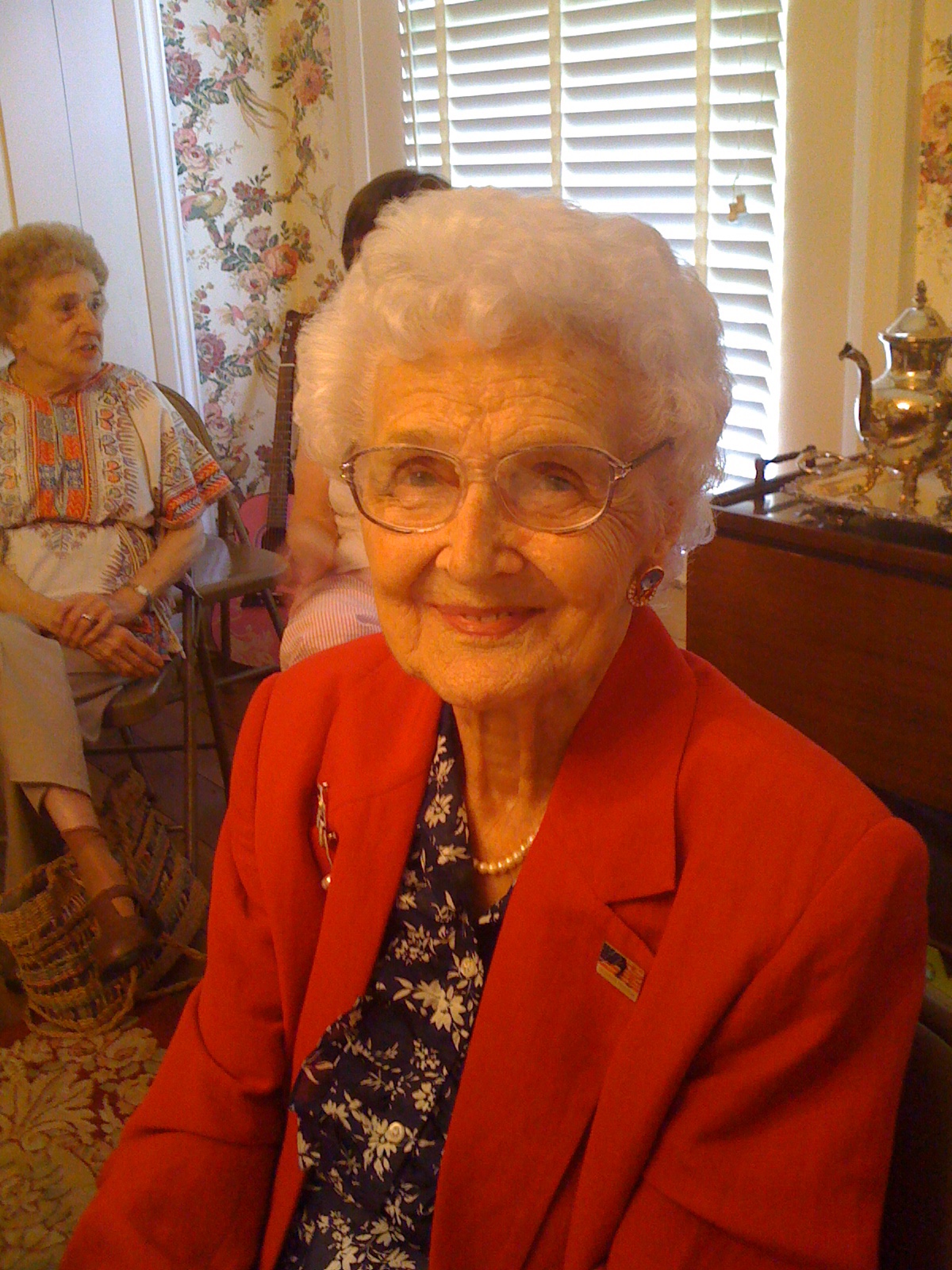
I’ve had many thoughts and phrases, quotes in her own voice floating around in my head these past few days. Cutters’ heart stopped beating Thursday morning. She was at Hosparus, Norton downtown Louisville, having been moved there from my parents’ home the night before due to congestive heart failure. Our family has been together for the funeral and the obituary has been published. Funerals bring families together but Cutters had such a way of doing that in all her living glory.

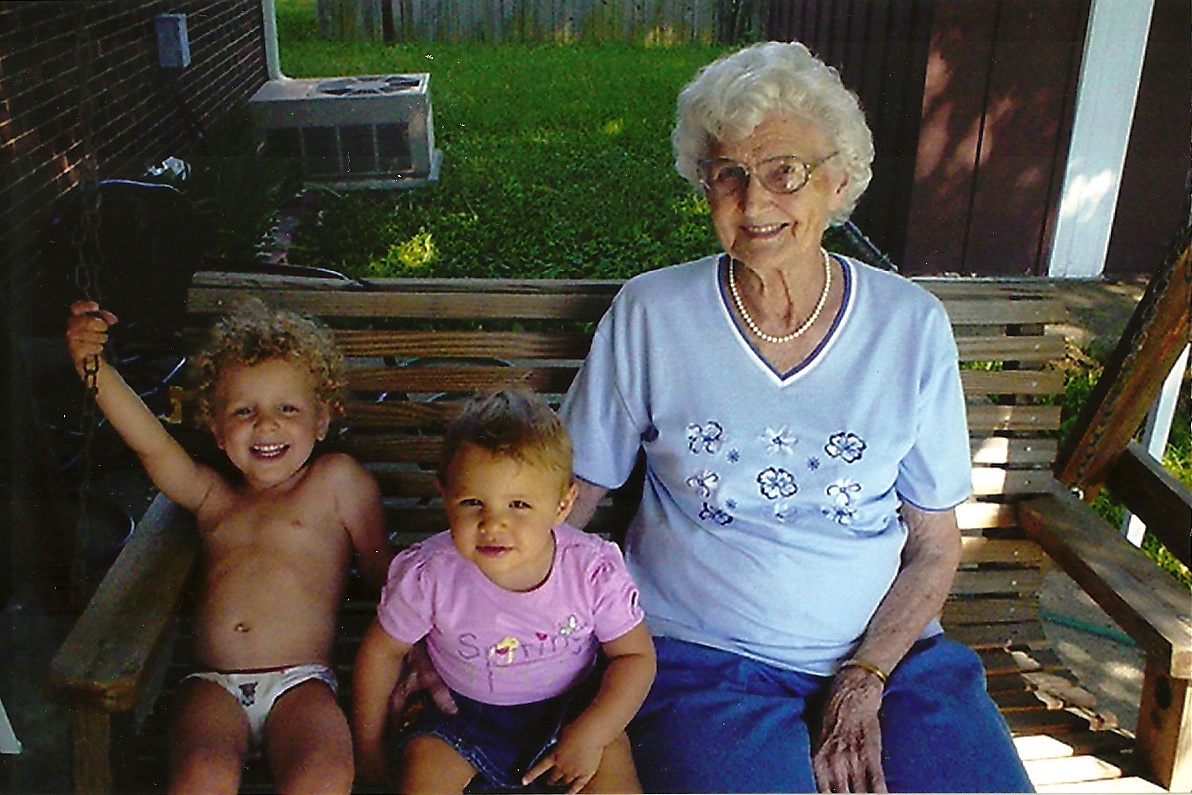
Her home was a hub of activity. As a guest, you were always offered a glass of sweet iced tea, something good to eat that was usually from the garden. The tea, freshly made that morning and filled to the rim of a signature orange Tupperware pitcher with the matching lid. This was always perched in the same top-shelf position of her pristinely maintained refrigerator. Cutters’ cooking, specifically corn, green beans and homemade bread (more on this later) are the stuff of legend.

Holidays were special and the extended family all looked forward to the tradition of gathering at Cutters’ home to eat dinner and exchange gifts. As our group size grew, we instituted a one-gift, even-exchange policy but Cutters was always exempt from this rule. Each year she had a stack of colorful boxes and she was known to take her time, as if savoring the suspense, when opening each one.  She had a quiet meticulousness about her – whether using a letter opener to separate the tape from the wrapping on a gift or how she would keep her Tupperware and cabinets so organized. Her home was a reliable map for mindful intention – everything in its place throughout all the years I visited.

She took this quality philosophy with her on her travels. You could tell Cutters had been in your home for a visit – your pantry became organized, there was a pitcher of sweet tea in the refrigerator and your mayonnaise jar was wiped clean by approximately one finger’s length from the rim all around the circumference. That was a signature move. Wiping jars clean and a metaphor for how she left everything better in her wake. She created with lovely hands ever in motion.

I learned so much about life from Cutters but less from her words and more from how she lived her life. As St. Francis said “Preach the Gospel each day and, when necessary, use words.” She epitomized this. Her pastor spoke that “Violet lived the fruits of The Spirit.” As he read each one, the layers of her were confirmed – Love, Joy, Peace, Patience, Kindness, Goodness, Faithfulness, Gentleness, Self-control.

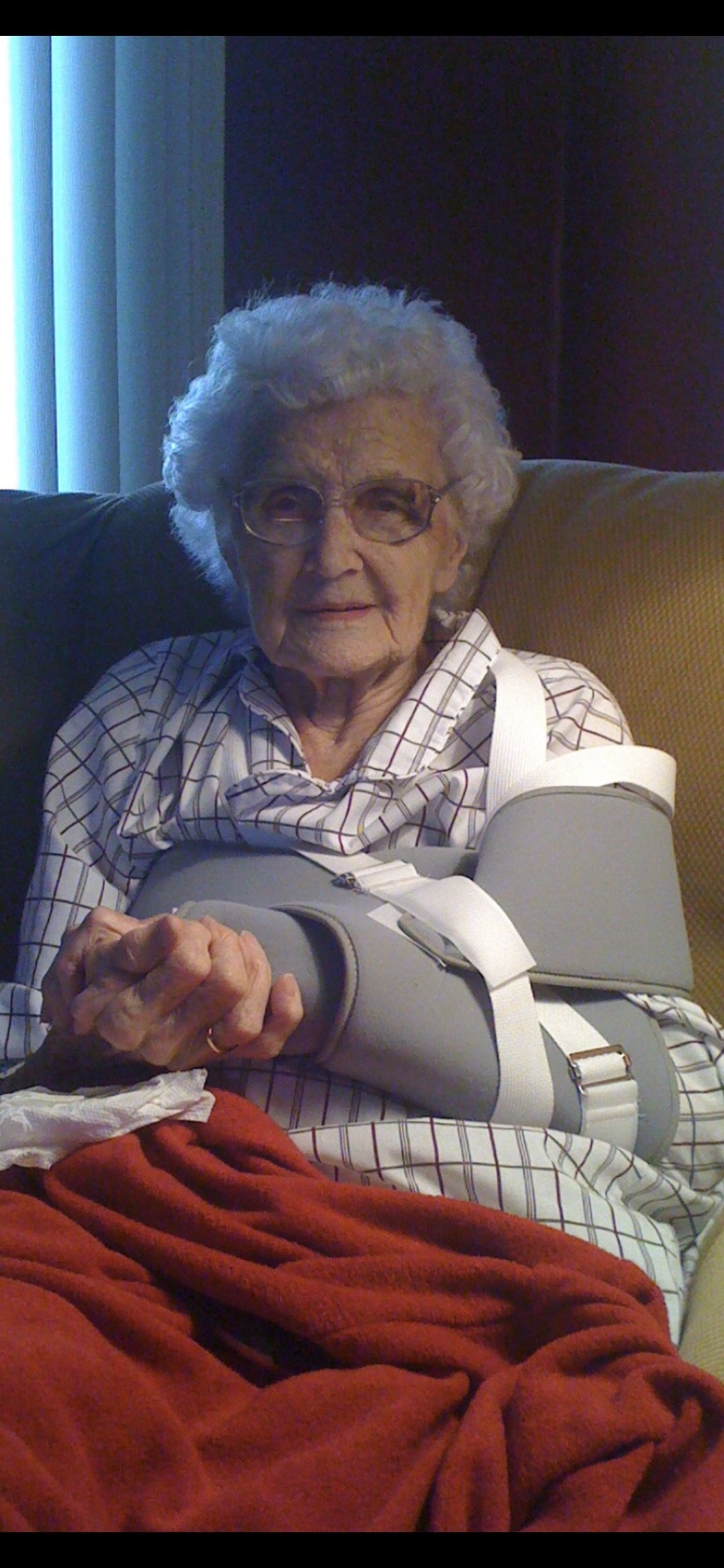
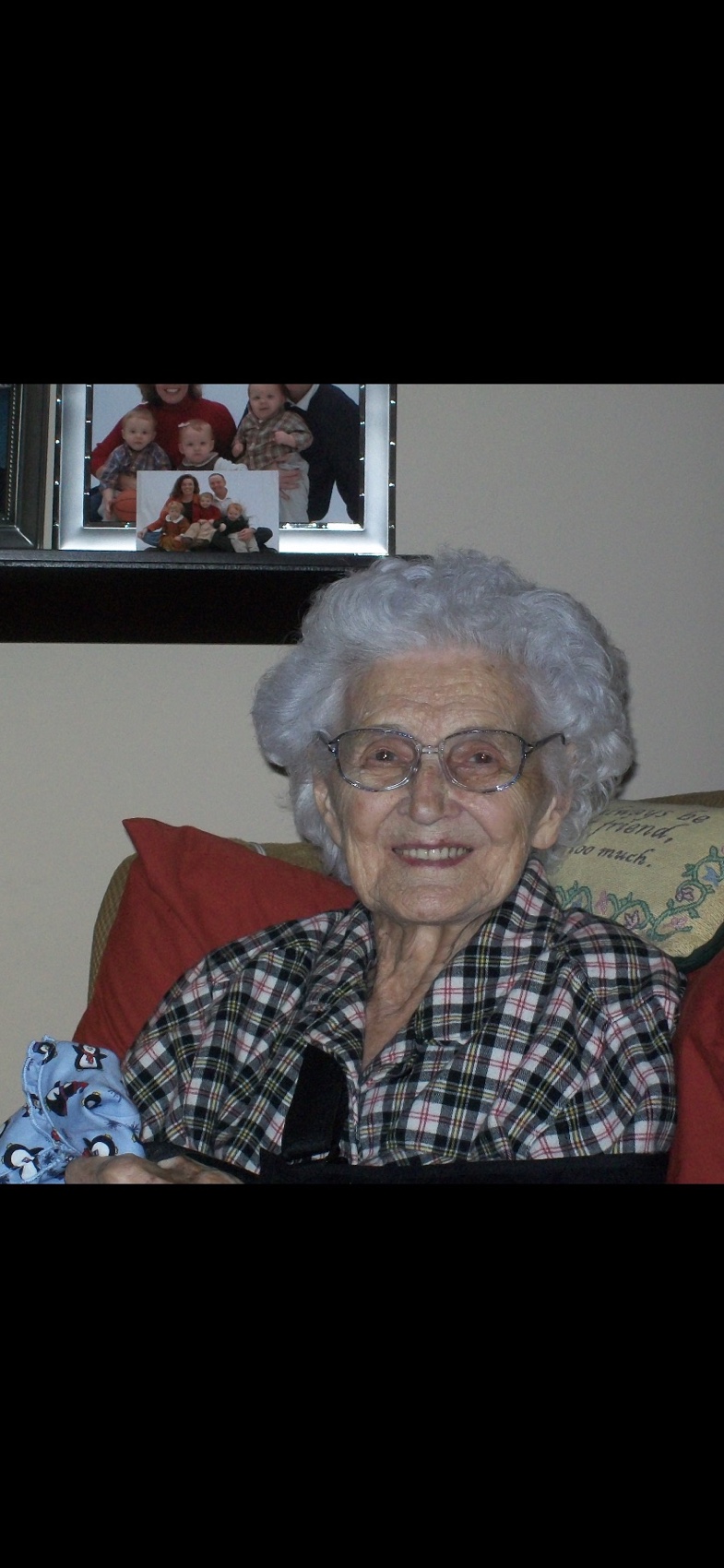
How did she do it? How did she live to be more than 100 years, as she did? It was only the past year that she appeared challenged by her age. My granddaddy died in 1977 and she survived him all these years living on her own. In her late 90s, she rebounded from two falls that resulted in broken bones and long recovery. She was widowed for 37 years, retired from working 40 years ago and only needed palliative care in her final year of living. I think of the chapters of her life and how I was blessed to be part of the final chapters, especially. Caring for Cutters had a profound effect on my soul. It was a holy experience.

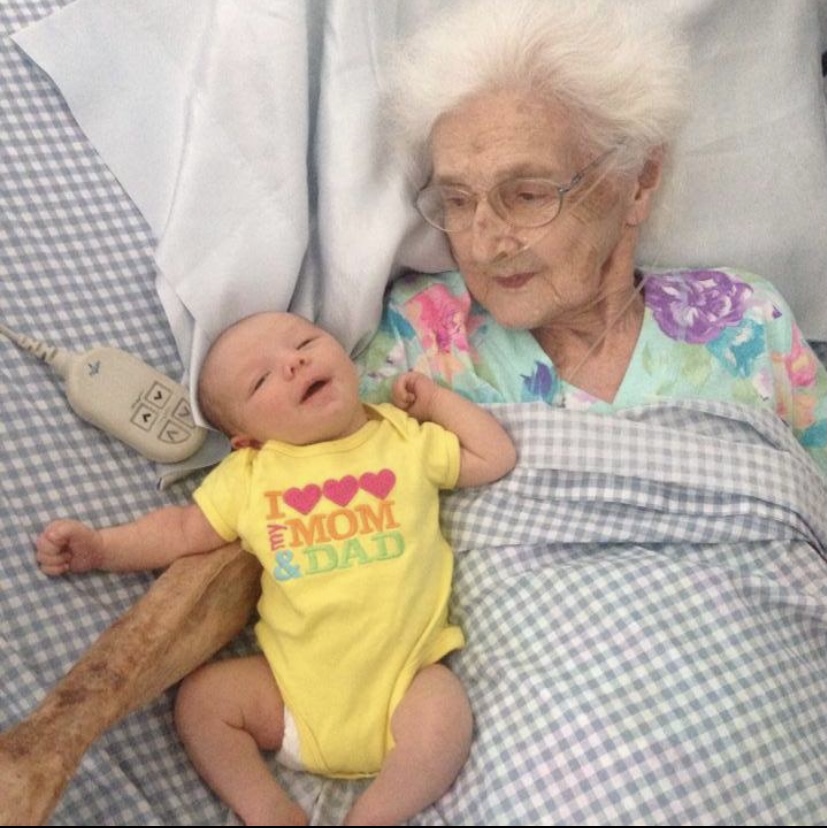
She was born in 1913 – a year after the Titanic sank, for a point of reference. I did not know the young girl who lived to see World War I, the Great Depression, Hitler, World War II, the Korean & Vietnam wars, and modern day conflicts.  A farmer’s wife’s life is a harsh one in even the best of circumstances and yet, how did she do it? As my cousin Richard noted in his eulogy, life expectancy for a female born in 1913 was around 55 years.  And, as he so beautifully stated, “she did it so well she got to do it twice.”

Cutters was one of five children born to Manfred Fayne and Daisy Easley in Jessamine Co, KY.  She had a sister, Hazel, and three brothers – Ralph, Ray, and Bill. Cutters and Granddaddy met at their church, Wesley Chapel United Methodist, where she remained a member all her life. In fact, she was born in the house next door to the church on Sugar Creek Pike. They attended different schools but their families knew each other from Wesley Chapel. He was a farmer but later in life, when I knew him, he was a man of many keys as a security guard or something. He would sit with me at the kitchen table and the keys hanging off the ring seemed to always be in motion. I remember playing with them. I was in 4th grade when he died. Our family was living in Pittsburgh, PA and I remember the sting of the late night intrusion by the overhead light as mom woke us to pack up for the sudden trip home. I probably didn’t understand or know why but I am sure I knew it wasn’t good.  I can’t remember but imagine it was a longer than usual drive back to Kentucky.

Full circle, here we were back at Hager & Cundiff Funeral Home. Granddaddy’s service was held there in 1977, very soon after my grandmother Fanny Dean Corman Mathews’ funeral, my dad’s mother. That was a hard year for my parents who each lost a parent. Mom didn’t want to move very far from Cutters and Louisville was about as far as she was comfortable. So, Pennsylvania was a stretch of one year that was hard for all of us. My own 4th grade tribulations of that year can be addressed later.

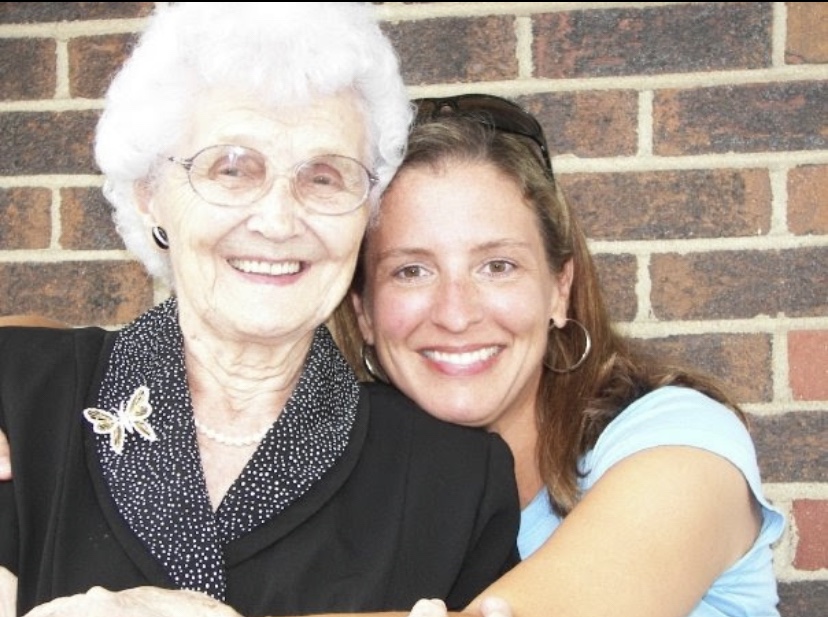
Cutters made this life better for all who knew her, and possibly for those who didn’t have the opportunity. Though her heart stopped, her loving legacy lives on in ways both small and magnanimous. Cutters inspires me to live more as she did.