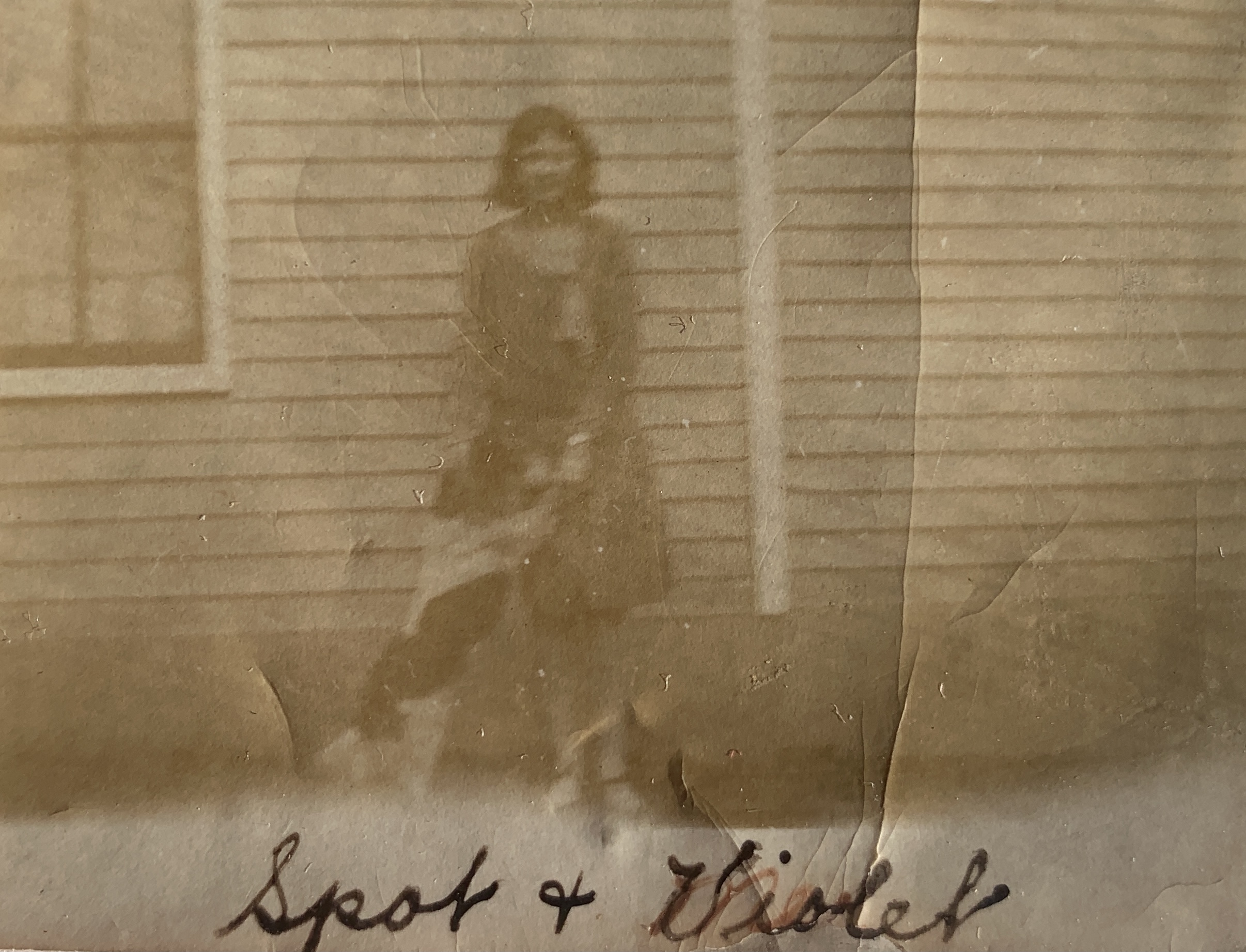
Spot, the Faynes’ farm dog, from my grandmother’s youth. Violet Fayne and her family lived in and around Little Hickman along Sugar Creek Pike in Jessamine County. She was the middle sibling of the five children and was born in June 1913. If she was still living at home when this photograph was taken, it would be circa 1924-1929.
My grandfather, Pleas Mathews, died from osteomyelitis, a kind of staph infection of bone, reportedly contracted during WWI service while marching with US forces in Germany in worn-out boots and open sores on his feet. I wonder could there have been a parasite or exposure to chemicals? This was back before penicillin. Pleas was with the First Pioneer Infantry-Company I from June 1918 – July 1919, soldiers who built bridges, roads and maintained railroads just behind the front lines while maintaining combat readiness.
From family scrapbook
A well-written account of the First Pioneer Infantry in WWI can be found here in full text. And, I found a photograph of soldiers clearing a road in France in the same period my grandfather was serving there. The visual is powerful in alighting my imagination and the narrative follows Pleas’ journey in detail.
The family lore, if you will, consists of a reported medical study of Pleas’ collar bone regrowth, and the harsh realities in gradual progression of the overall physical toll from his illness or illnesses. Dad says Pleas had open sores over his body and his bones were routinely scraped down then packed with some substance leaving the sores exposed. He cringed as he recalled living with the smell of his father’s rotting bones and flesh. He recounted a story when Pleas bought some snake oil from a salesman in town that Dad said was nasty to taste or smell. They had no idea what was in it and he remembers how that bottle sat up on the shelf afterwards. Later, Pleas improved after receiving a trial of penicillin. His life was saved with the introduction of penicillin but the long-term effects of his illness were a plague for the remainder of his life.
From family archive collection
I’ve found few definitive details about his illness. One source is his WWII draft card I found on ancestry.com and in our family’s archival collection. Dated April 27, 1942, he was a light complexion, 47yo white man with brown eyes, brown and gray hair, weighing 130lbs at 5’7 1/2″ tall. Local (draft) Board No. 88 Jessamine KY registrar, Opal N. Finnell, notes as “Other obvious physical characteristics that will aid in identification” and her handwritten response, “Disabled soldier of last war Collar bone removed.” There are numerous itemized medical bills and receipts of payment during the period of 1946-1953. The pattern of treatments over time tell a grim story for his remaining years. Pleas died in 1955.
I cannot begin to imagine the life of my father in his youth and now regret not being more mindful of every detail he’s ever shared about those years on the ol’ homeplace. He grew up working tobacco on the family farm with his siblings, cousins, neighbors and, for a brief time, with German POWs. Hard working, hard living. A work ethic that epitomizes the definition of the term. Up early to work the farm, off to school, back home to finish chores. Do again the next day. I think of how I get “worn out” from some housecleaning or yard work and his daily life required both kinds of labor plus schooling. That book learning was a Mathews core value.
Pleas lost some use of his arm following the removal of his collar bone. This leaves many unanswered questions, including was this due to an injury from combat? Being the head of the household with limited dexterity, Pleas daily faced physical challenges of maintaining a farm, producing both cash crops and food for the family and farm animals. My dad was the son chosen to labor as literally serving at and as the hand of his father.
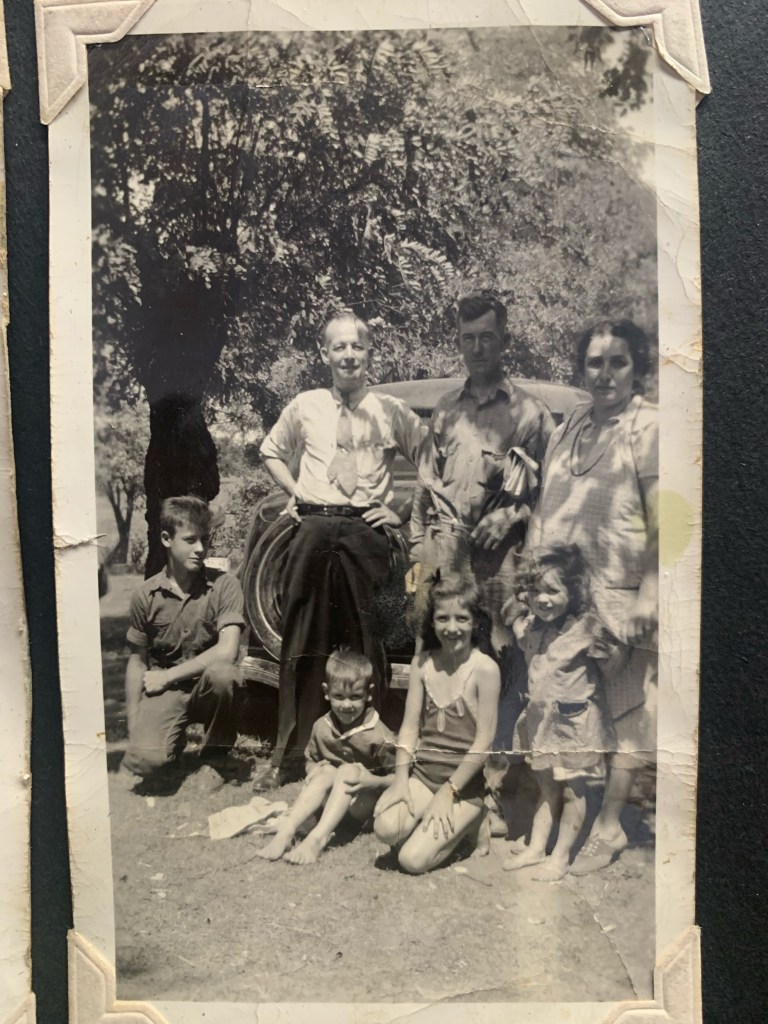
Pleas Mathews standing next to Fanny Dean in a family photo circa 1940, 21years after his military service. This image supports the narrative of his infirmary in which his collarbone had been removed following WWI.
Dad said Pleas would cite Bible verses from memory throughout their working hours. Knowing what little I know as a modern-day understanding of PTSD, clues like this make me wonder about his state of mind and whether he suffered the same. The nature of their family dynamics is infinitely intriguing to me through the lens of a soldier’s return home.
From the family archive collection – The Mathews – (left to right) John Shepherd (kneeling), John William Mathews, Pleas Mathews, Fanny Dean (standing), Kenneth Mathews (my father), Marjorie Mathews, Marita Mathews. Circa 1940.
Love of animals can be inherited, right? I did not have the experience of farm living as most of my extended family did. I did not get to know reliance on other creatures for living as on a farm. I speak from a place of recognition and honor of my own ignorance. I have enjoyed, though, many pets in my life.
My own first pet was a turtle. We got Toby, a Cock-a-Poo (cocker spaniel+poodle) for our family dog in the mid-1970s and numerous pets came and went thereafter. Often, my parents “hosted” – a somewhat reluctant state, if memory serves. An iconic black cat named Puddy Tat lived with me – and a few other kind souls – from new born kitten when I was in college until the birth of my second baby – a good long life of sixteen years. Then, I have a series of stories about the puppy tales from my years mothering my own young ones, but that is a different blog.
Looking at these old photos of family, some featuring the animals of the farm, I wonder about their natures – what manner of beasts. Of course they had personalities, and they had relationships with their humans. Dad has told us stories, like the one about his younger self (not more than 10yo) milking cows at 4am, running into a bull in the dark one morning, and the reaction they both had being startled. Some stories are poignant lessons of surviving on the farm, most are funny as to hear a Mathews tell it. Some are heartbreaking.
From the family photo album circa 1930
Take Ring, for example, featured in images from when Mr. and Mrs. John S. Mathews lived in the “big” house, as my Dad recalls first knowing it. Mr. & Mrs. Mathews – they were my Dad’s grandparents, who both died within a month of each other in 1940 when Dad was barely five. They lived to 76yo and 71yo, respectively. Ring served their farm and according to other photos in the family archive, there were possibly two other collie-type dogs well-loved on the farm after Ring.
I doubt Ring was an inside dog. I gather from my father that was NOT a thing back then and ESPECIALLY no where near any kitchen. So, likely Ring slept in the barn or some other cover when it was cold. Ring looks most like a border collie and herding IS a farm job. I imagine I would feel very affectionate for the dogs guarding the homeplace and alerting to visitors, dangers and otherwise. In my memory, there was a long drive from Harrodsburg Road back to the house and included more than one fence gate and crossing a bridge at the creek. In other words, some ground to cover as a runner, whether four or two feet.
Here’s my question: Why is Ring posed solo in a portrait? It suggests to me Ring wasn’t considered just an old farm dog to whomever took the photo. It looks like Ring is smart, eager to please, has something in the mouth and is wearing a collar with a tag. Maybe Ring knew a few tricks, too. “Sit” being a good bet.
Cut to modern days. Now we dress our pets for special occasions, the stores are filled with varying gourmet feed, toy and treat options. I do not leave my pup outside in the cold. He’s always been an inside dog and I have the traveling tumbleweeds of hair and dander to prove no matter how often I run the vacuum. He, too, is a smart dog and I have pictures and video on my phone as evidence. I am certain he would love to run himself out in farm living, as would I.
that.Kentucky.girl
A 6th-generation Kentuckian on a journey to find out – follow along
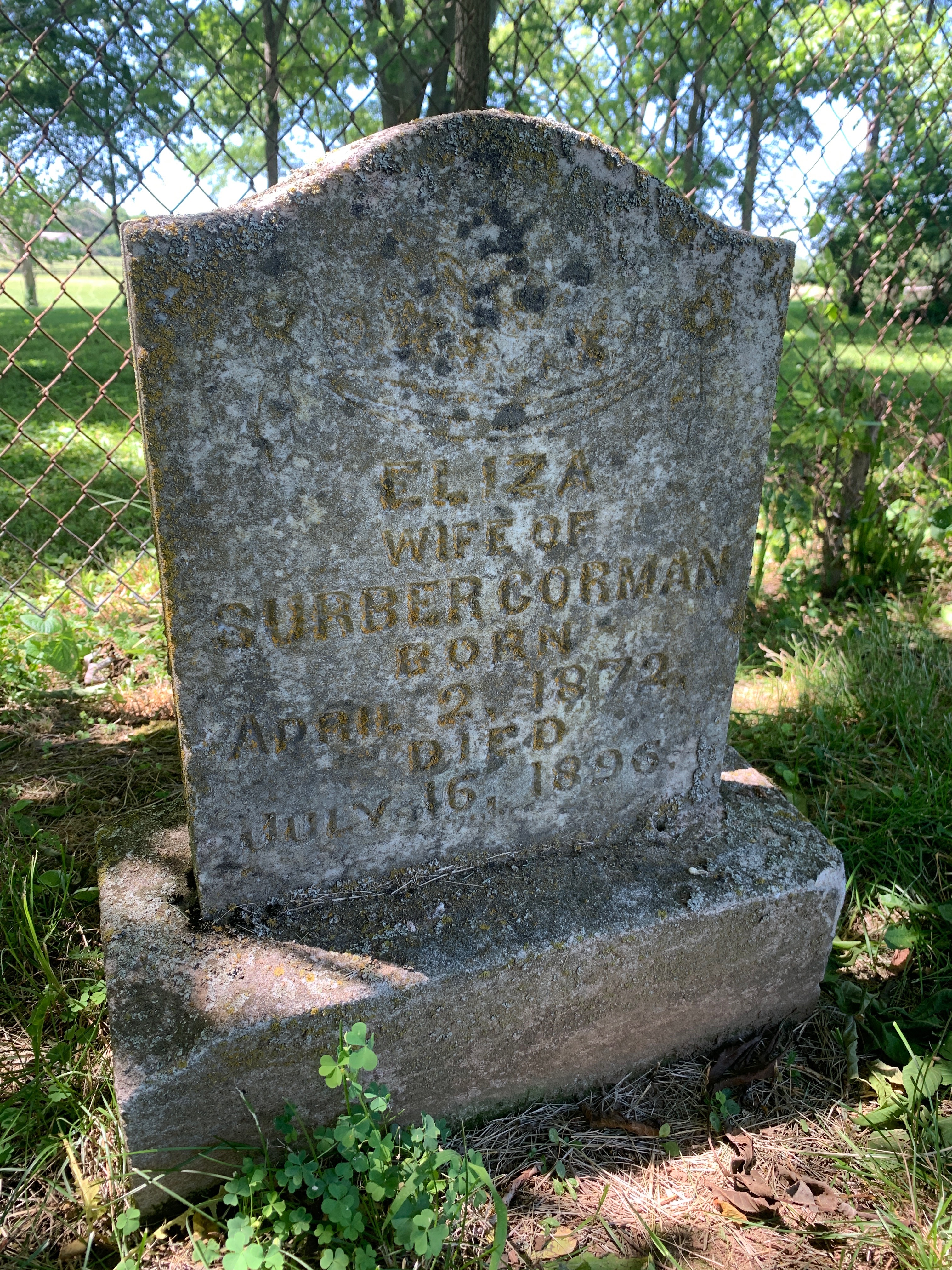
Headstone for Eliza Jane Murphy Corman, located at Corman Cemetery, Bethel Pike.
ELIZA
WIFE OF
SURBER CORMAN
BORN
APRIL 2 1872
DIED
JULY 16 1896
This is a sad kind of realization. If this woman, Eliza Jane Murphy Corman, had not died prematurely, tragically – I would not be here (at least not as I am in this form). In being a mother and protecting the life of her child, she died. She sacrificed by instinct is my guess.
Eliza Jane Murphy was born 1872 in Pleasant Hill, Mercer County, KY. She was 16yo when she married 21yo Surber Corman in Wilmore, KY, January 1889. Their first child, Minnie Pearl, was born March 31, 1890, followed by Roy Sidney in January 1893.
Surber Harden Corman with first wife Eliza Jane Murphy
The story goes that 3yo Roy fell into Jessamine Creek, that ran across their family farm, and in attempting to retrieve him, Eliza – who was pregnant with their third child – fell in but saved Roy. She died in July 1896, as did the unborn child, from complications caused by the accident. After only 7 years of marriage, Surber was a widower at 28yo with two young children.
At 34yo, Surber married his second wife, 20yo Martha Jane Bradshaw, in 1901. These were my great-grandparents.
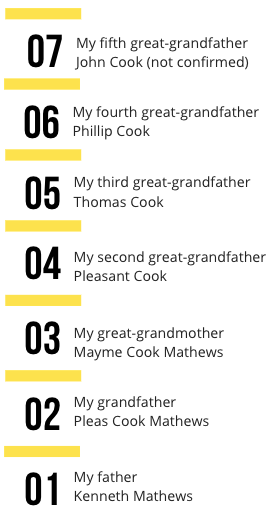
My paternal 2nd great-grandfather was named Pleasant Cook. Not a name I think I’ve ever heard before until researching. But, pleasant. Is it possible to live up to it, though?
He was born at home in 1832 at the Cook Family Home, Harrodsburg Road on the border of Woodford and Jessamine Counties. His mother, Nancy Easley, died when he was 8yo and his father remarried to Pauline Bryant in 1841.
inscription on back: “farm with Pleas Cook in front of house” circa 1910-1917
Pleasant worked for 21 years as a carpenter following an apprenticeship to Woodford County carpenter Barry Holloway that began in 1847 when he was 16yo. In 1850, he was employed by Holman R. Crow as a carpenter along with Aaron Crow, George Crow, William Trisler and Neal Wilson.
Two years later, when he was 21, he went out on his own professionally and married Mary Chowning in October, 1852. Over the next 17 years, they had four children: John, Melvin, James, Charles and Mayme (my great grandmother). They farmed 230 acres at this homeplace he assembled over time in the same area as his in-laws.
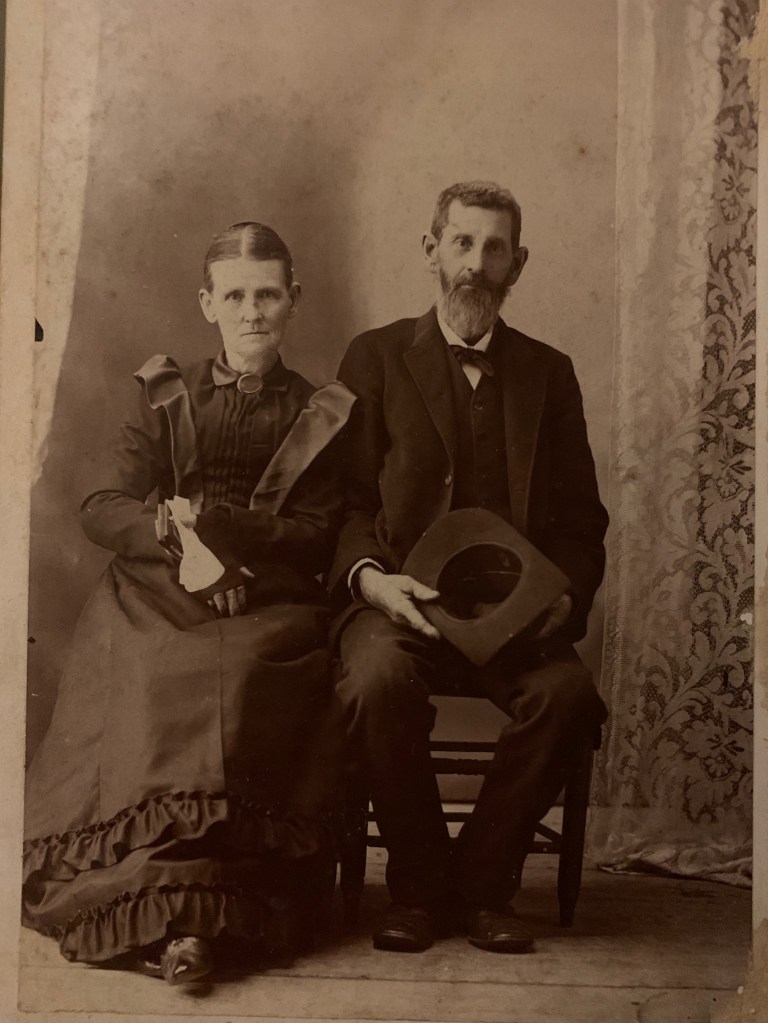
My great-great grandparents, Mary Ann Chowning and Pleasant Cook. The image, therefore, appears to be a middle-aged period based. Best guess: circa 1880-1890. If you ask me, his hands suit his vocation. And, it may have been something for mother to hold a handkerchief, book or something – can’t distinguish.
Pleasant outlived Mary by 8 years after she died in 1909 at 75yo. His wife’s obituary includes a reference to the Cook family as “one of the oldest families of the county.” Pleasant lived to be 86yo and died in August 1917. Grandson Pleas had just registered for the US draft in June 1917.
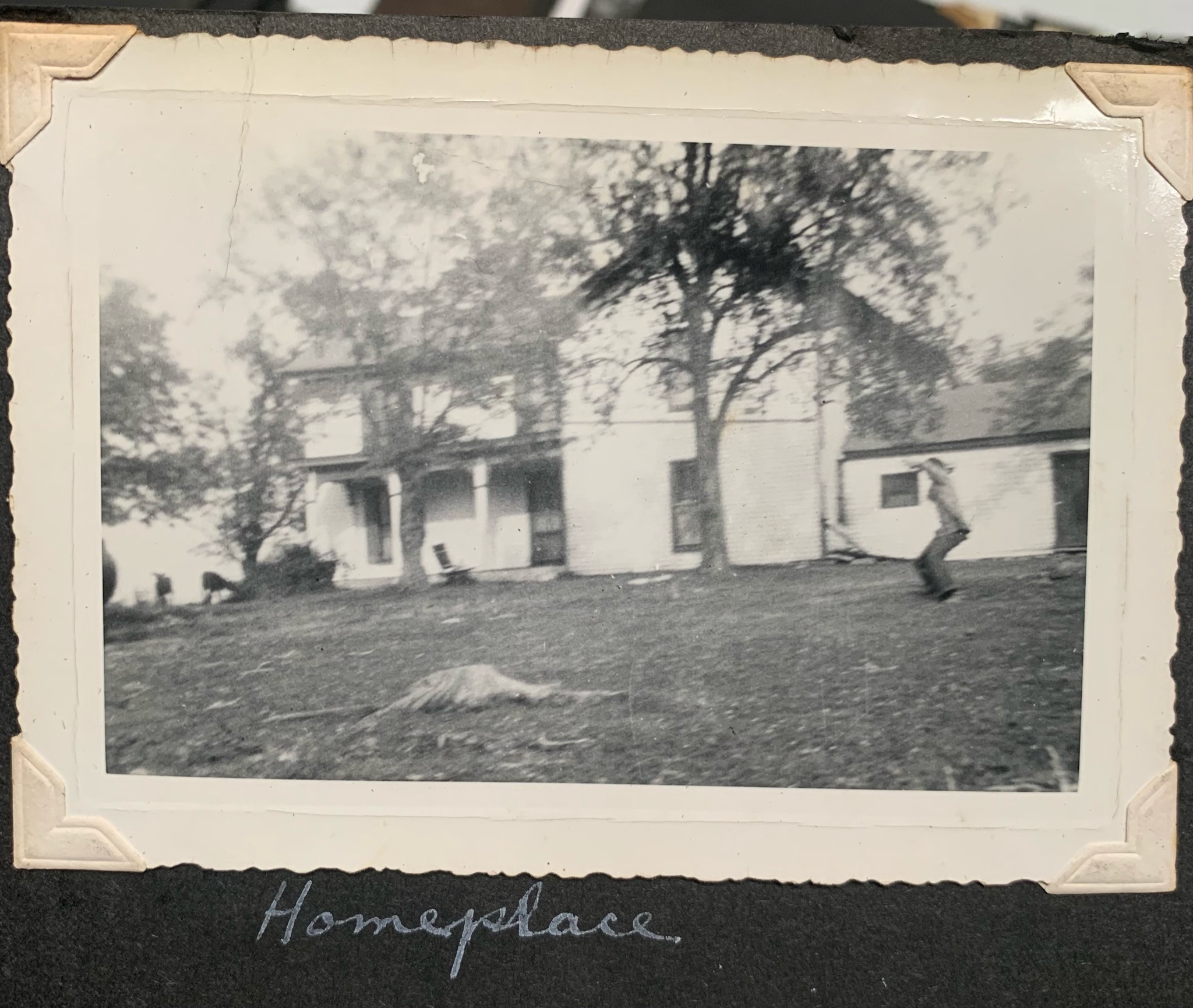
The “ol’ homeplace” on Jessamine Creek in Jessamine County, Kentucky at the time of my grandparents raising their children, including my fathercirca late 1940s
With confidence in research validations, I know Pleasant Cook and Mary Chowning to be my great-great grandparents. From Pleasant, I am working my way further along his tree including his father named Thomas Cook, mother Nancy Easley (surname also found in my maternal grandmother’s tree) and possibly three siblings or more. From the family artifacts collection, there is a handwritten listing of Chowning family and their respective birth, death and marriage dates which will come in handy when I get to that stage of research. The Chownings, along with the Singletons, were early settlers of the area and presumably purchased from surveyor and settler James Douglass. *Research topic for later
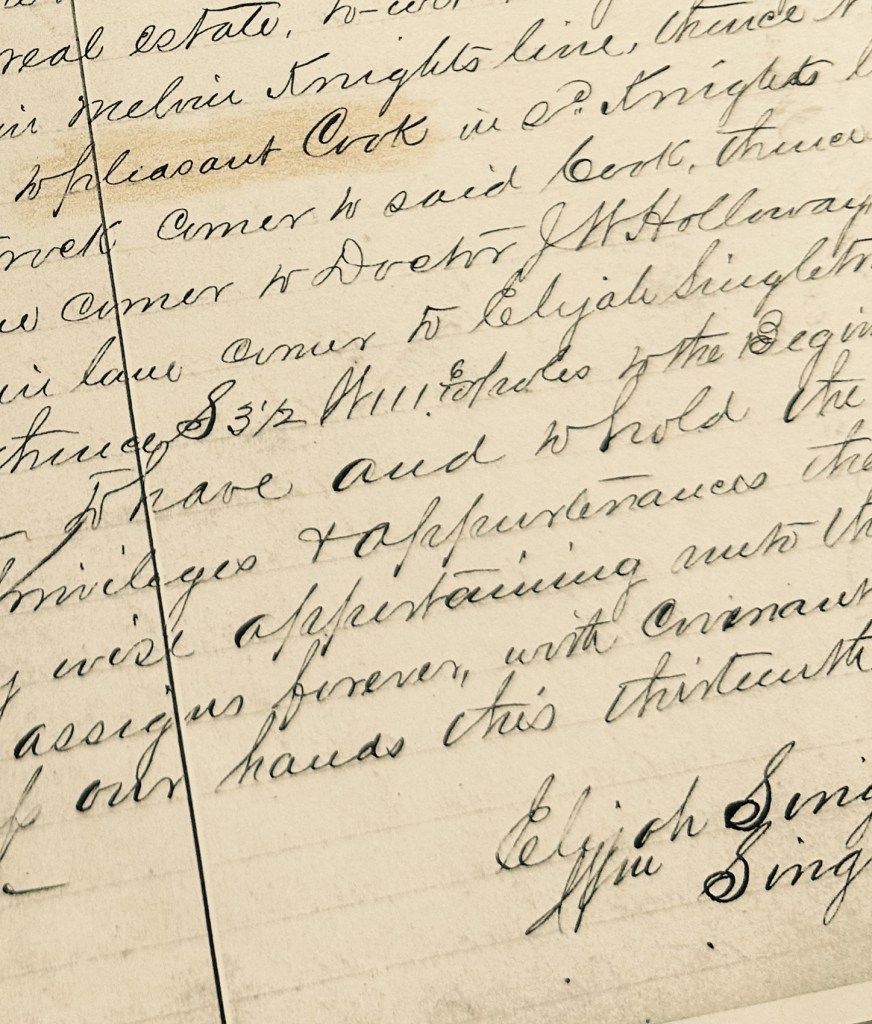
Cropped image of 1868 deed
According to Jessamine County land records, Pleasant Cook, at 37 yo, was first recorded in 1868 as a grantee of 10 acres for $1,000 by William Singleton. From that date, there are six entries in which Pleasant was a grantee. By tallying the descriptions in those deed records, he acquired more than 222 acres in the 34 years between 1868-1902.
He worked with his hands, creating things of utility and beauty both in the fields and in the workshop. I have been fortunate to have been gifted several pieces that belonged to “the Cooks” as Dad says he was told. Perhaps Pleasant made one of them himself . . .?
I wonder: Did Pleasant have his eye on this particular land for his assemblage into a farm for his family and subsequent generations? Was it the realization of his goals and dreams?
Clyde McQuerry (22 years old) married Violet Fayne (17 years old) on December 24, 1930 in Jessamine County, KY.
A Christmas Eve wedding
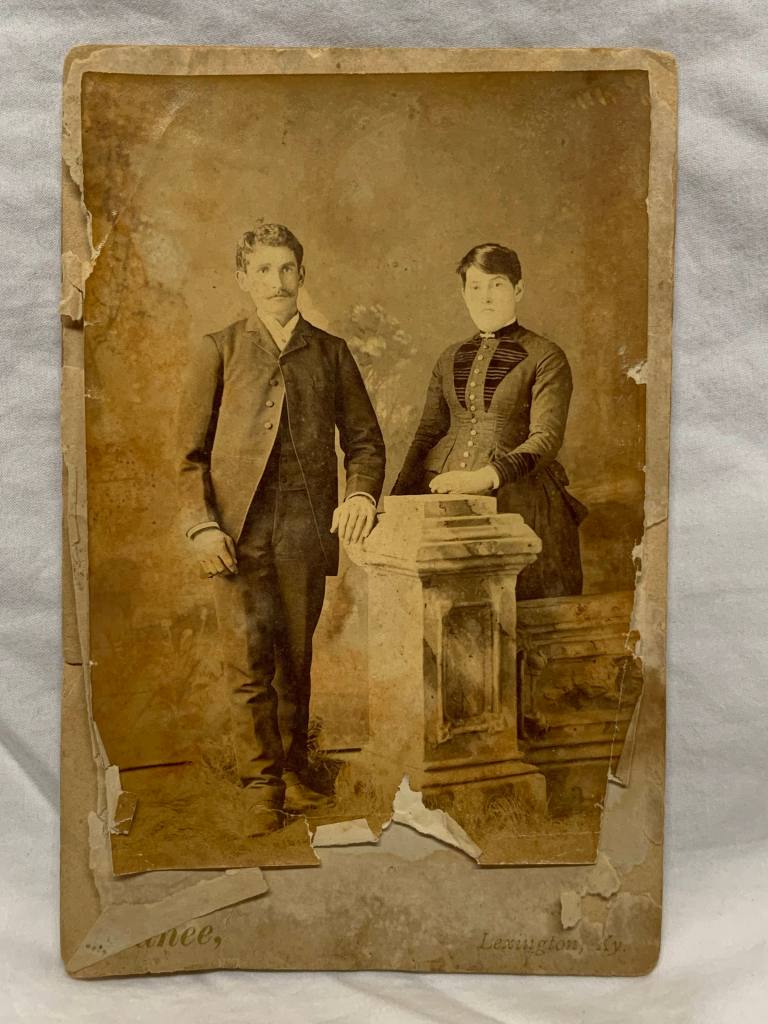
A courtin’ scene – Clyde Herbert McQuerry and Violet Sunbeam Fayne, my maternal grandparents circa 1928-30, Sugar Creek Pike, Little Hickman, Jessamine County, Kentucky
The phrase “don’t make ’em like they used to” comes to mind. I look at these young faces and see the beginning of a love story that spanned nearly a century. Look at their arms, hands. Entwined and naturally fitted together. A metaphor for their lives. Even after Clyde died from cancer in 1977, Cutters kept their connection a daily practice. She wrote to him in her diaries, everyday for 35 years until she could no longer see well enough to write. She reached 100 years before that happened.
Both families were members of Wesley Chapel on Sugar Creek Pike, Cutters was born next door to their church, which is where they met, although they did attend different schools. The McQuerrys lived on a large, likely multi-generational farm south on the banks of the Kentucky River. Up the hill from there on Sugar Creek Pike was (and is) Wesley Chapel and neighboring Fayne family. Her utter goodness must have shot through him like a lightning bolt. Or, what if it was a slow burn, like they played together as kids? Both born and raised in a rural church community, it is within the realm of possibility. (I will ask Daddy Mac & ‘Tuh.)
She carried a quiet wholeness and holiness, fingers ever in motion creating something for sharing like legendary bread and crocheted afghans. Cutters, as I knew Violet much later in her life, had this look at times of a far away thought. Her pause was nearly always just to the point you felt the need to pick up a dropped thread. You’d even inhale to speak, then suddenly, she released, nailing the reply. She reflected before speaking her wisdom and I suppose it was by the lessons along the way. She knew EXACTLY what was going on but she had to reflect and, in doing so, to compel you the same. In her presence you’d welcome the pause. She also delivered zingers with impeccable timing. Very clever. It was fun to giggle with Cutters.
The Cutters I knew also carried a sadness reminiscent of long-suffering as in The Bible. She carried it selflessly, though. She could experience joy and you can be sure if you were in her presence the light of that joy was always bright and it shone on you. Always, even in pain and brokenness, she spread light. And, she knew brokenness.
The proximity of Wesley Chapel to the house where Cutters (Violet Sunbeam Fayne McQuerry) was born on Sugar Creek Pike, Jessamine County, KY. Photo: C. Mathews taken on a Ya-Ya’s trip in 2020, 107 years after.
But, in this moment, Clyde, my grandfather at 22 years-old, and Violet, my grandmother at 17 years-old, were in love and embarking together on the future. Christmas Eve. It was a Wednesday. It was 1930. Was it magical? How I hope there may have been a photo I might discover. When did Clyde know she was an angel walking among us? Did he whisper to her “I want to marry you on Christmas?”
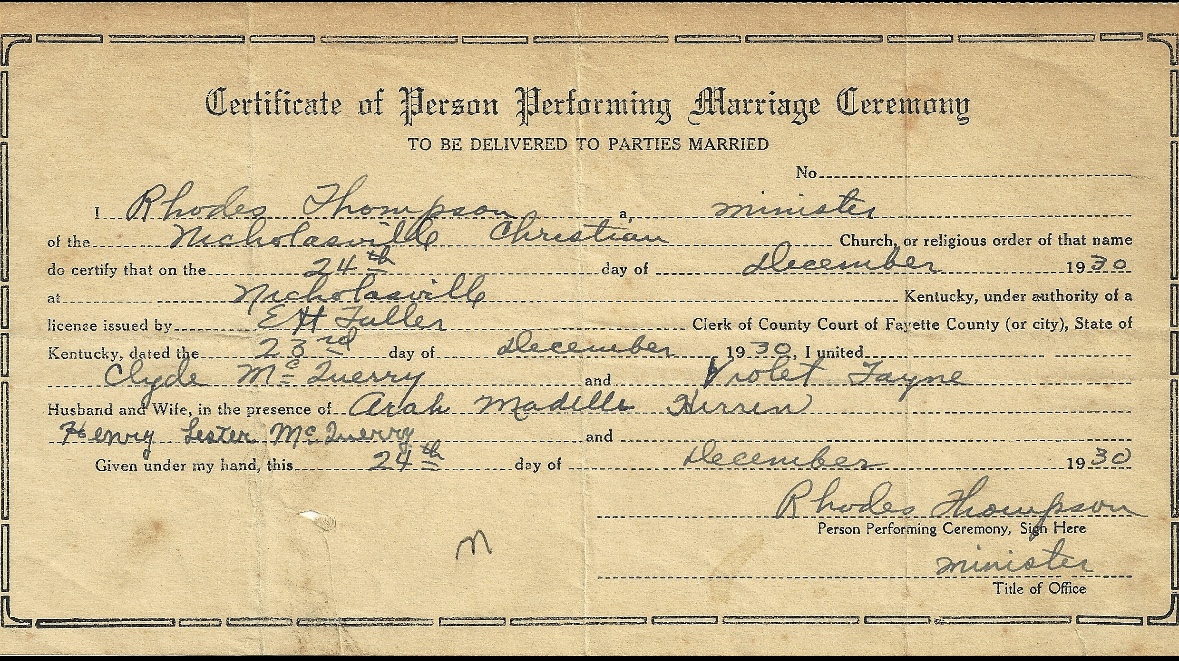
The McQuerry-Fayne marriage ceremony was conducted at the parsonage of Rhodes Thompson, minister of the Nicholasville Christian church. [NOTE: I would like to locate this minister’s home address in future research.] You might wonder why the wedding ceremony did not take place at their own church, nor with their own minister. I wonder about that, also. Maybe these “crazy kids” had a reason.
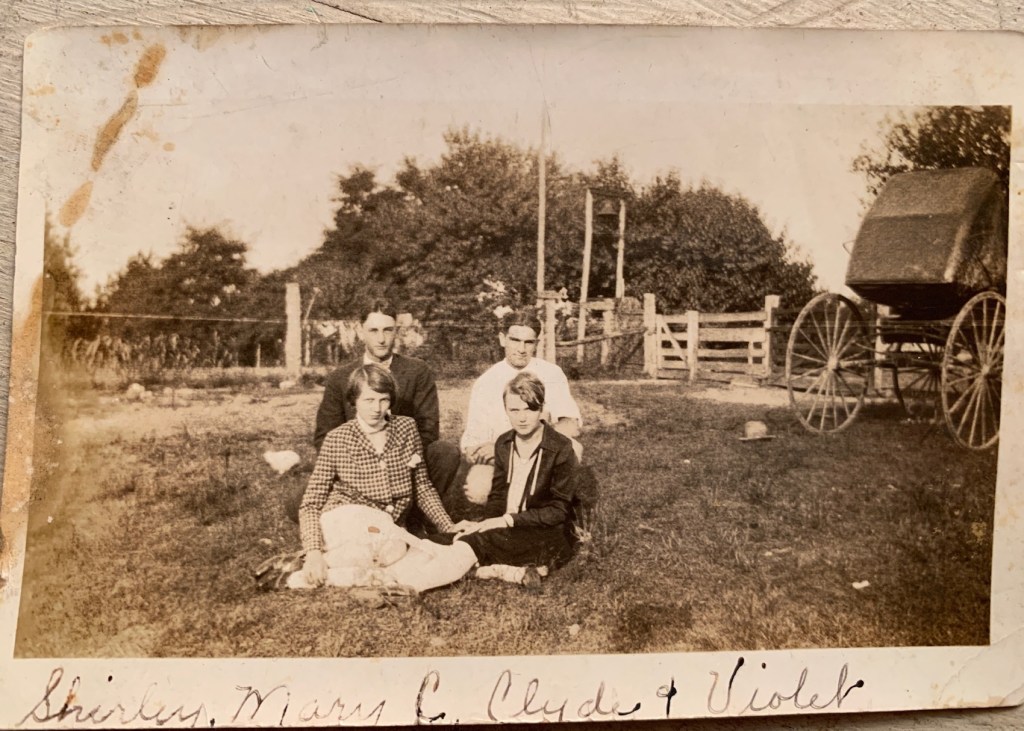
Shirley (unk), Mary C (unk), Clyde & Violet date unrecorded, circa 1928
She had graduated from high school in the summer. She was a teenager, they were young’ns. So, you graduate high school and you plan to be married at Christmas? Don’t you wonder what the “kids” talked about then? Their connection to the outside world was through radio, newspapers, telegrams and word of mouth. The Wall Street Crash had occurred in October 1929 and now, one year later, people were IN the Great Depression. Also, prohibition was in effect, but I don’t think either of them drank alcohol ever.
In the photograph of four friends, you can see what looks like a buckboard in the corner, a fence and a large wooden gate. It reminds me of watching Little House on the Prairie growing up. Cutters liked to watch the TV show, also. I have a litany of “LHotP” stories. That Pa, though. More for another time.
Certificate of Person Performing Marriage Ceremony
TO BE DELIVERED TO PARTIES MARRIED
I, Rhodes Thompson, minister of the Nicholasville Christian Church or religious order of that name do certify that on the 24th day of December 1930 at Nicholasville Kentucky, under authority of a license issued by E. H. Fuller, Clerk of County Court of Fayette County (or city), State of Kentucky, dated the 23rd day of December 1930, I united Clyde McQuerry and Violet Fayne Husband and Wife in the presence of Arab Madilla Herrin(sp?), Henry Lester McQuerry Given under my hand this 24th day of December 1930.
Person Performing Ceremony, Sign Here – Rhodes Thompson
Title of Office – minister
Witnessed by two people: A. M. H. (need help deciphering what is both hard to read and completely unfamiliar) and Henry Lester McQuerry. Should I expect to see a vouchsafe for the bride (because I do)? Where is the implication for her parents’ permission in this process? Or, was that not a thing? Their minister and her family are not represented on the certificate. I mean, where were HER people? Where was Big Mother and Ol’Daddy?
Celebrating Christmas for me was never complete until going with family to “Cutters’ Christmas.” I would venture to guess any of the cousins would say the same. The annual tradition remained a deeply special occasion for decades and maybe that was how Violet chose to honor their special day and her love Clyde each year.
Merry Christmas Eve and Happy Anniversary to you, Clyde and Violet. May you be entwined around each other celebrating for eternity.
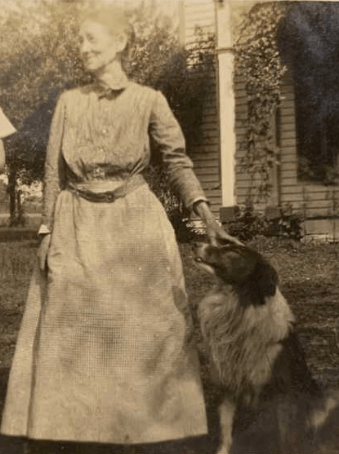
Mayme Cook Mathews, my great-grandmother born 1869 and died 1940 in Jessamine Co
Mrs. John S. Mathews – Mayme Cook
MATHEWS
Mrs. John S. Mathews, 71, died at her home on Brown street here Monday after a two-day illness. She is survived by her husband and two sons, Pleas C. and John Mathews, both of Nicholasville.
Deceased was the daughter of the late Mr. and Mrs. Pleas Cook one of Jessamine county’s oldest families. She was a kind Christian woman and was loved by a large host of friends and acquaintances.
Funeral services will be held at 10 o’clock Wednesday morning at the Baptist church, the Rev. J. A. Stallings officiating. Interment in Maple Grove cemetery here.
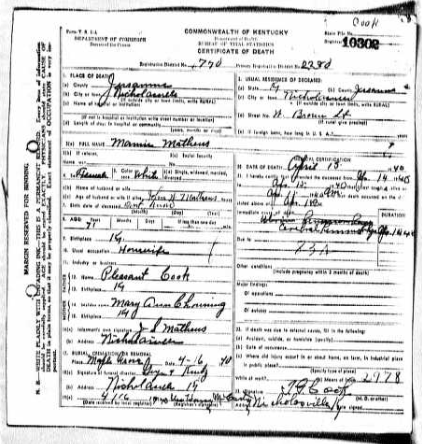
Mamie Mathews’ death certificate is missing details and has her name misspelled. Was the authorizer hurried? The cause of death is noted as “cerebral hemorrhage” which could be due to an injury or a stroke. The Lexington obituary cites paralysis, which again leads me to believe she had a stroke.
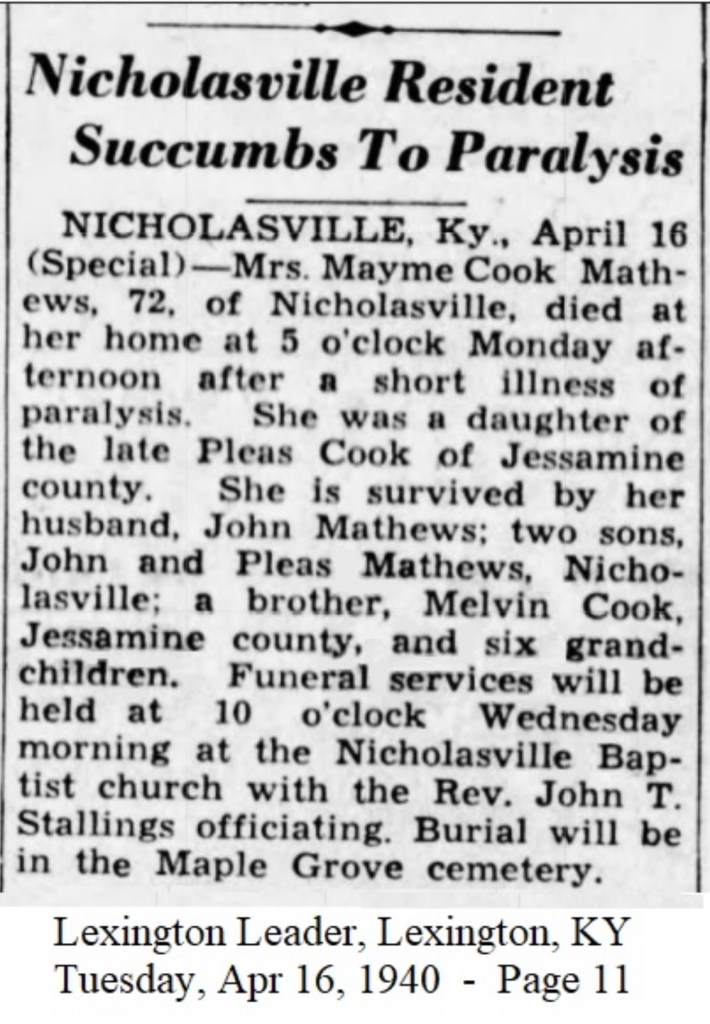
Nicholasville Resident Succumbs to Paralysis
Nicholasville, Ky., April 16 (Special) – Mrs. Mayme Cook Mathews, 72, of Nicholasville, died at her home at 5 o’clock Monday afternoon after a short illness of paralysis. She was a daughter of the late Pleas Cook of Jessamine county. She is survived by her husband, John Mathews; two sons, John and Pleas Mathews, Nicholasville; a brother, Melvin Cook, Jessamine county, and six grandchildren. Funeral services will be held at 10 o’clock Wednesday morning at the Nicholasville Baptist church with the Rev. John T. Stallings officiating. Burial will be in the Maple Grove cemetery.
The Lexington Leader, Lexington, KY, Tuesday, April 16, 1940 – Page 11
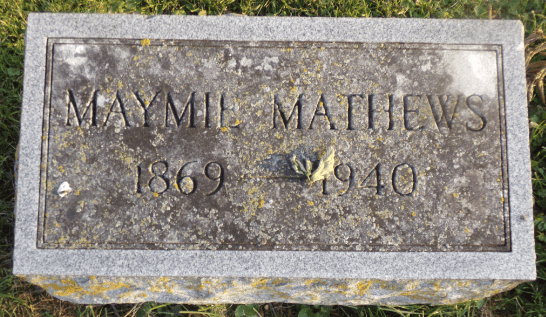
Maple Grove Cemetery, Nicholasville, Jessamine County, KY image borrowed from Find A Grave
FOR FURTHER RESEARCH: Why is her address listed as Brown Street? Brown Street is in town and runs off Main Street near where the new library was opened. I thought John & Mayme Cook Mathews lived on the farm until John died, ironically about a month after Mayme died.
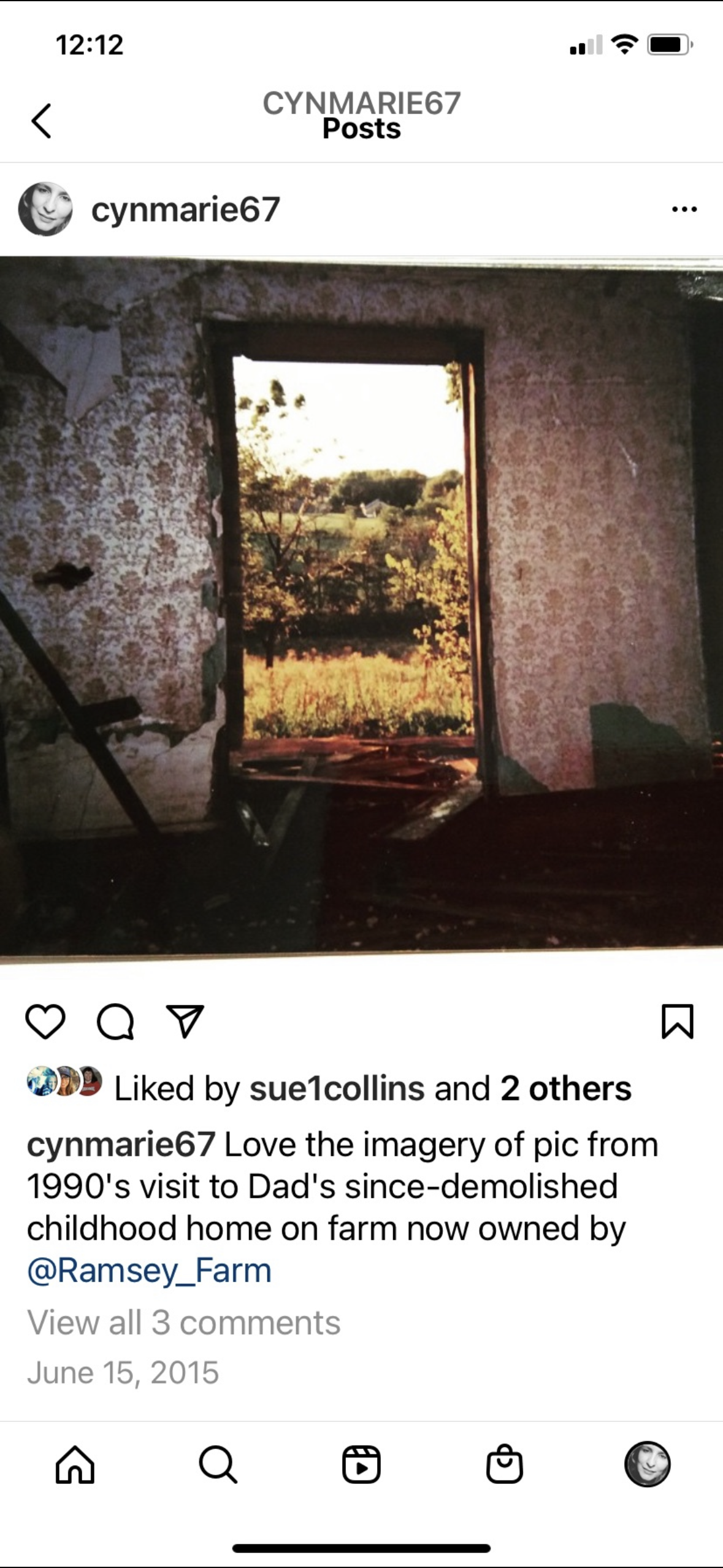
I made a visit to the home place of four family generations just up the hill from Jessamine Creek spring sometime in the 1990s.
The camera I carried with me was disposable and, truthfully, might never have been processed to the light of day. (I believe I still have undeveloped Kodak 35mm rolls from my youth somewhere in my boxed packrat tendencies. The canister with lid tale-tale (but not always of the contents, iykyk.))
Fortunately, I took those pictures that day – long before the genealogy bug bit down or the common use of cellphones, for that matter. And, not long before the building was razed. It had fallen into disrepair and sadly is no more.
My memory of visits to the home I called “Uncle Johnny’s” began when a very young child. The more prevalent in memory are those visits with Cutters, my mother Phyllis’ mother. I may have visited Grandmother Mathews more often than I have memories but they followed my grandmother’s move into town when she sold the property to eldest child, her step-son John Shepherd Mathews. Johnny’s wife Nannie Katherine died way too young in September, 1974. He and their four daughters stayed on the farm. Cousin Susan is a sweet wealth of stories from her life on the farm.
This picture is the view at the back, and I believe an east-southeast-facing side of the house just above the kitchen. I THINK and my Dad will hopefully correct me when he reads this if not. A second-story bedroom above is where my cousin Angie and I had spent hours jumping out of a closet loft onto a bed.
At the time of this photo, the floor was strewn with remnants of the lives that had made this home along with leaves and other debris blown in from the outside through the missing window pane. Perhaps you can imagine pausing amongst the random relics, and glancing out an opening between peeling wallpaper and broken beams and witness the irony in its framing the exterior beauty of Kentucky blooming and a farmhouse in the distance.
If you came across Abandoned Kentucky (@Abandoned.ky), this would have been a perfect feature, had timing been different.
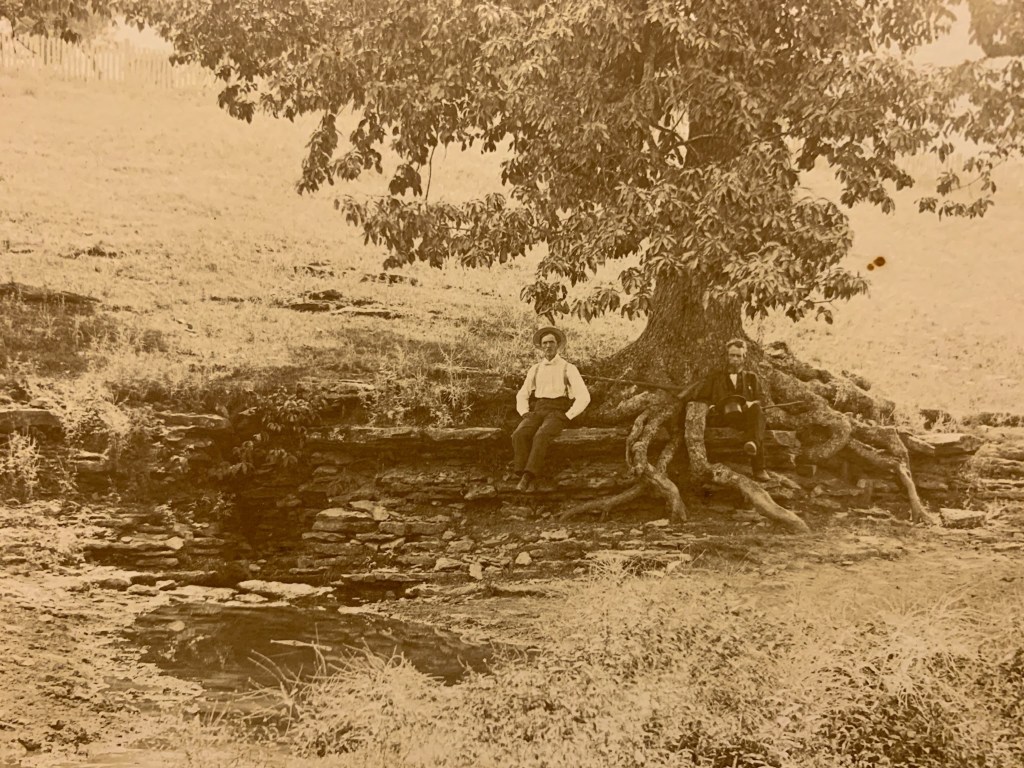
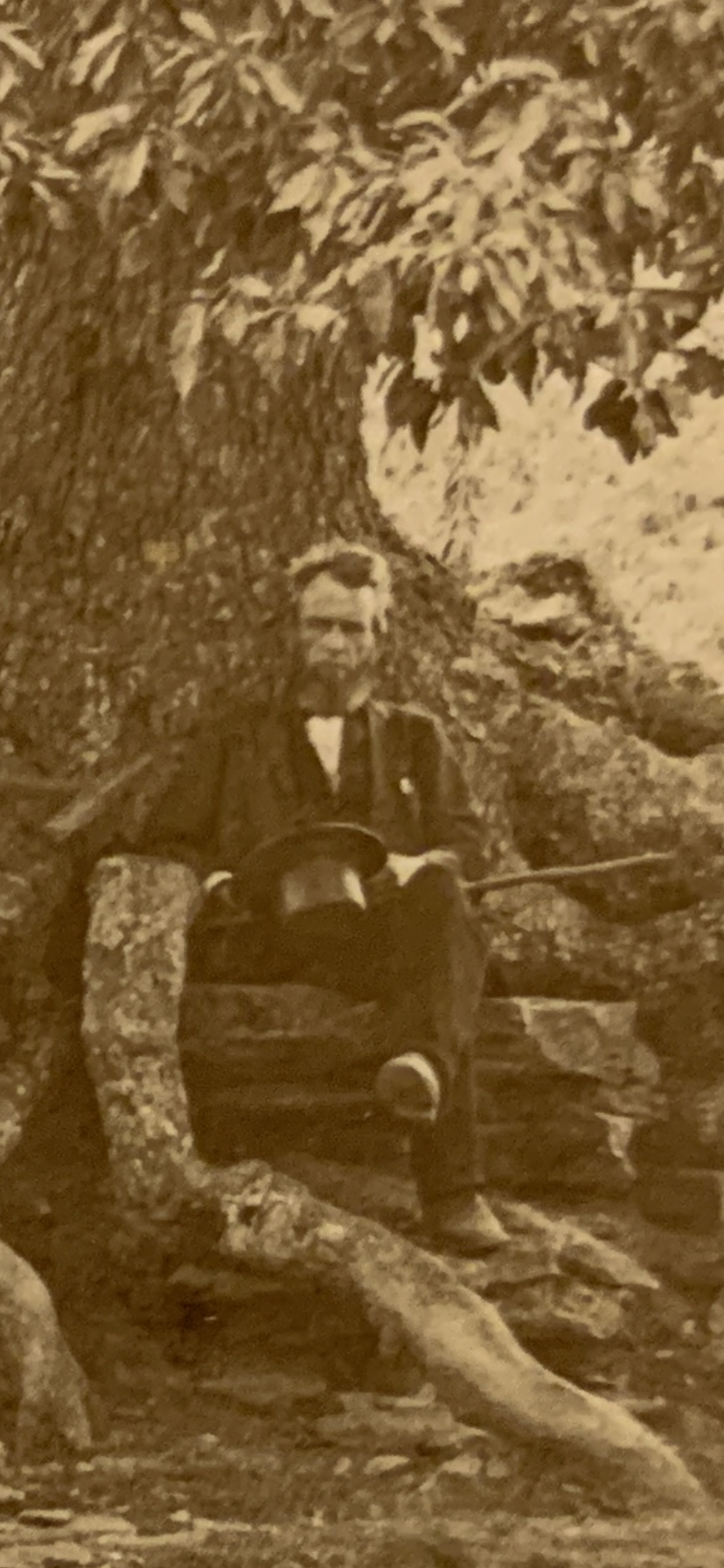
I love this photo. It was taken at the head or spring of Jessamine Creek that I knew somewhat as a child and my father knew as part of his daily life at the old home place. An original of this image is among the family heirloom artifacts I am in the process of documenting, which leads me to wonder if these men are ancestors of mine. The slope of the hillside, stacked layers of limestone formation, trickling water you can almost hear, the majestic shade tree with exposed mature roots like tentacles and brush in the foreground. I easily wax romantic about the richness of the scene. Additionally, this image appears in History of Jessamine County, Kentucky reference found in the Jessamine County Public Library. There are many great resources there.
Can anyone help me estimate the date of the image? The original print I have is affixed to a kind of cardboard so I am not risking damage to examine the back for any notes or context. Does the attire of the two men seated amongst the exposed tree roots provide clues? The man in suspenders does not look significantly of any particular time period as white shirt, trousers and suspenders is fairly common men’s attire. To me, the man on the right in his suit and with his hat and cane astride his lap looks reminiscent of Abraham Lincoln but that is not my assertion for it to actually be him. He would need to be squatted well into that spot, if so. There are physical similarities to my ancestor Pleasant Cook but I doubt the alignment of time periods.
At closer examination of the background milieu, I see the repetition of pattern similar to a fence, a barn and perhaps a farmhouse. I am in the process of determining at what point the land was acquired into our family. A Jessamine County deed recorded in the mid-1800s shows Pleasant Cook (my 2nd great grandfather) purchased 53 acres along Jessamine Creek, among several other sizable property acquisitions. When he died in 1917, the creek property passed to his only daughter, Mayme Cook Mathews, my great grandmother. After her passing, the property was owned by my grandfather, Pleas Cook Mathews.
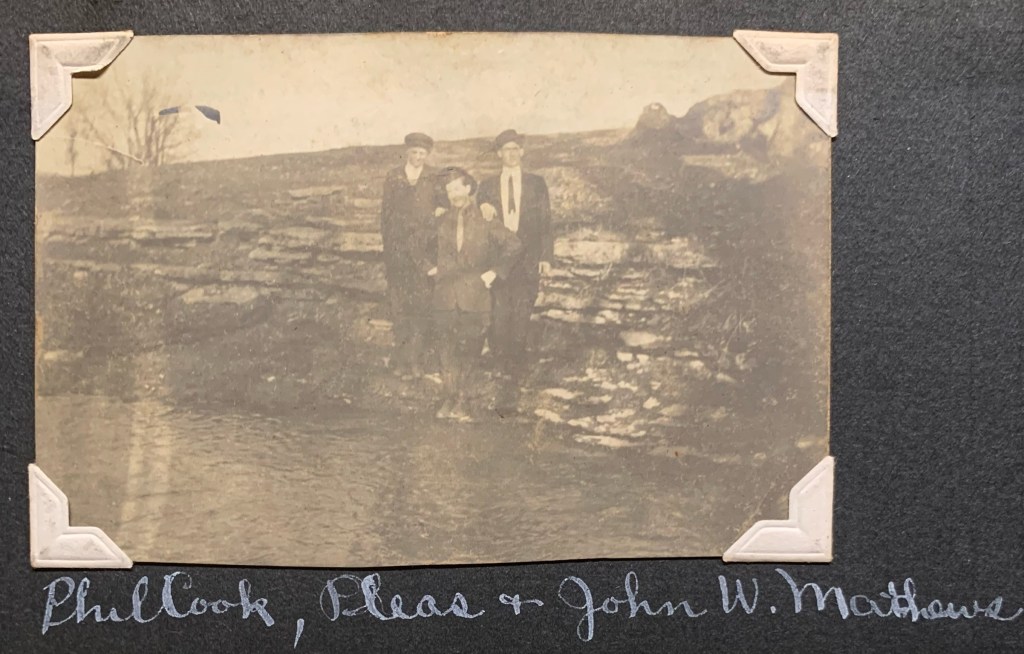
The image below shows my grandfather, his brother and their cousin standing together adjacent to the Jessamine Creek springs. I can estimate this image to be prior to 1917, which is when Pleas left for France in WWI. I wonder if this could have been taken at a special occasion, like a funeral. They are dressed in a way that makes me think it possible.
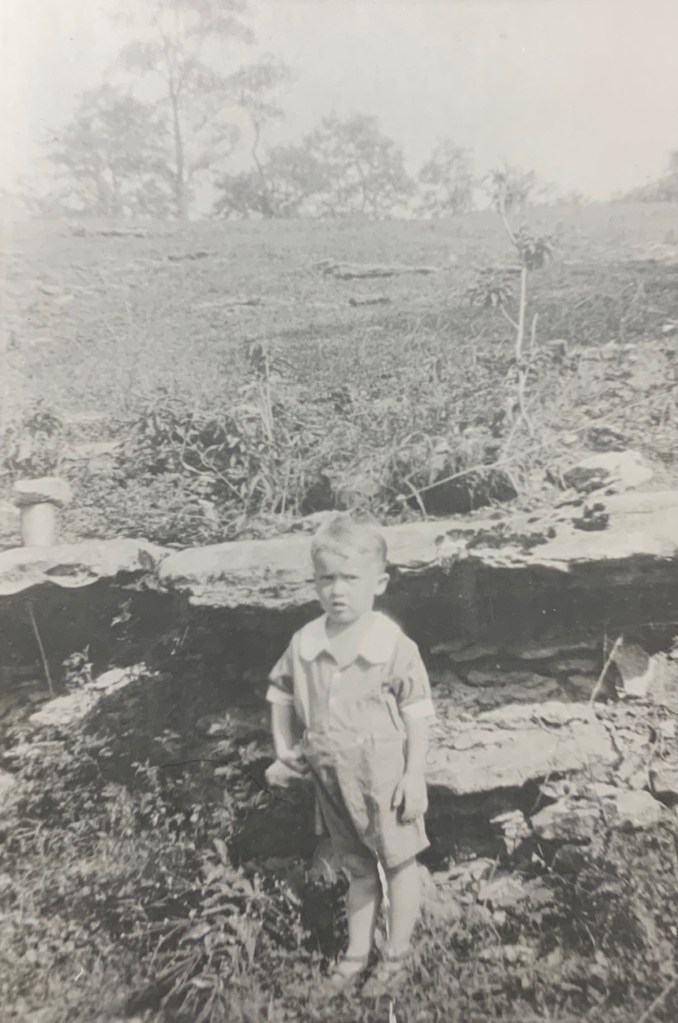
As another in this series, here is young Robert Ira Mathews, my uncle, at the same rocky crag as the other images. This image is circa 1935 based on the other artifacts of the same period. The Jessamine Creek spring was an integral part of my father’s family life growing up on the farm. More of those stories to come…








 that Kentucky girl